


Table of Contents
ToggleWhen a child searches for bus gra, Baby Bus, or a school bus game, they are usually looking for something simple: a game where they can drive a bus, pick up passengers, explore places, and have fun without complicated controls. One of the most relevant options is Baby Panda’s School Bus, a preschool-oriented driving and role-play game from BabyBus.
The game is more than simply moving a yellow bus around a road. It combines driving with traffic-safety lessons, small missions, different vehicles, exploration, and everyday activities. The current Android listing describes it as a 3D school-bus simulation for children and lists more than 100 million downloads, while the game is rated for Everyone.
This guide explains what makes a bus game enjoyable for young children, what they can actually do in Baby Panda’s School Bus, what parents should know before choosing it, and how to get more educational value from this type of game.
What Does “Bus Gra” Mean?
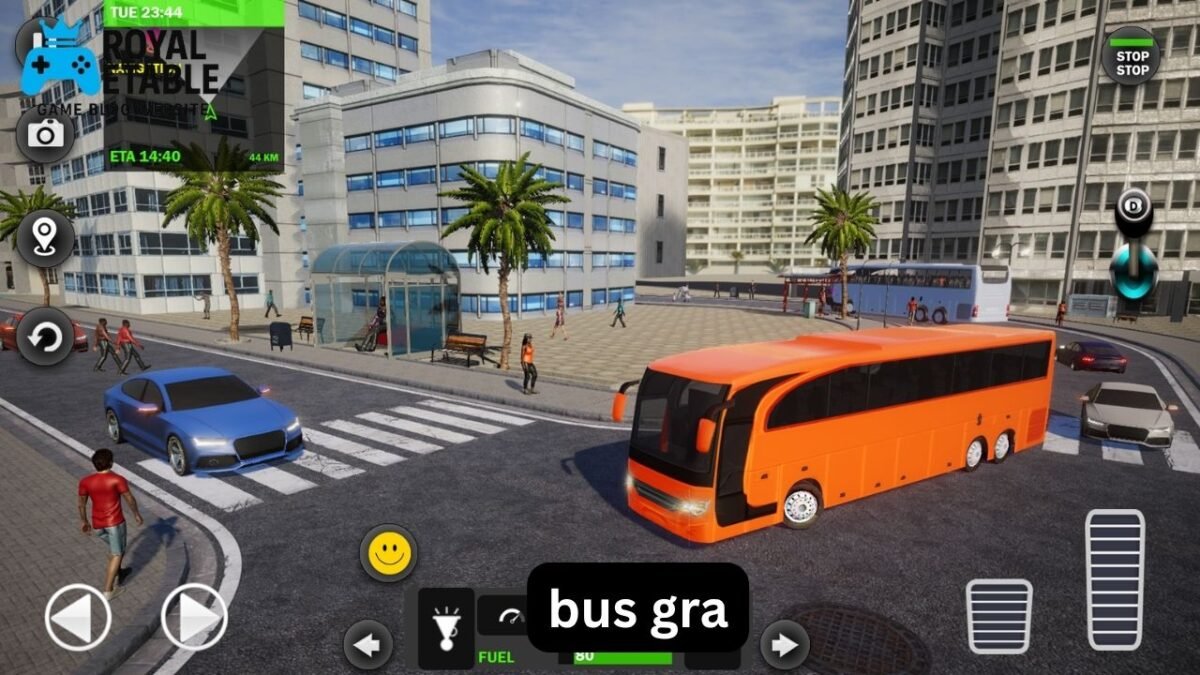
“Bus gra” appears to be a shortened or incomplete search phrase for bus game. Depending on what the child or parent wants, it can refer to several types of games:
- School bus driving games
- BabyBus games
- Bus simulator games for children
- Bus racing games
- Public transport games
- Driving and vehicle role-play games
For younger children, however, a school bus game is usually different from a realistic adult bus simulator. The controls are simpler, the environment is more colorful, and the emphasis is often on exploration and basic learning rather than realistic driving mechanics.
That distinction matters. A preschool child who searches for a “bus game” may not want complicated steering, fuel management, traffic simulation, or difficult missions. They may simply want to drive a bus, collect friends, visit school, and explore.
What Is Baby Panda’s School Bus?
Baby Panda’s School Bus is a 3D driving and educational game developed by BabyBus. It lets children experience driving several types of vehicles while completing simple activities and missions. The current Google Play listing includes school buses, tour buses, police cars, fire trucks, construction vehicles, and trains among the available vehicles.
The game is designed around a child-friendly combination of:
- Driving
- Exploration
- Role-play
- Simple missions
- Traffic-safety learning
- Everyday activities
BabyBus says its wider product ecosystem is designed for children around ages 0–8 and focuses on areas such as creativity, learning, thinking, social skills, and expression.
Is It Only a School Bus Game?
No. This is one of the easiest details to miss.
Although the school bus is central to the experience, the current version has expanded into a broader vehicle and role-play experience. Children can move between different vehicle types and activities instead of repeating exactly the same school-bus route.
The Google Play description currently lists six types of vehicles and 38 types of tasks, including transportation, firefighting, construction, car washing, fueling, and other activities.
That variety can make the game more interesting for children who lose interest quickly when an activity becomes repetitive.
How the School Bus Gameplay Works
The basic gameplay is intentionally straightforward.
A typical session might look something like this:
- Choose a vehicle.
- Start a driving activity.
- Follow a road or route.
- Pick up or transport characters.
- Complete a small task.
- Explore another location.
- Try a different vehicle or activity.
For a young child, this creates a simple sense of progression without requiring complicated game knowledge.
Driving the School Bus
The school-bus element is particularly useful for children who enjoy vehicle games but are not ready for advanced driving simulators.
The game introduces concepts such as:
- Stopping at traffic lights
- Giving way to pedestrians
- Using seat belts
- Driving along routes
- Picking up passengers
- Taking children to kindergarten
These aren’t advanced road-safety lessons, but they provide useful opportunities for parents to reinforce real-world rules.
Why Traffic Safety Is an Interesting Part of the Game
One of the strongest educational elements is that safety rules are incorporated into gameplay instead of being presented as a separate lesson.
For example, the game asks players to make sure passengers have their seat belts fastened before departure and teaches basic traffic-light and pedestrian-crossing behavior.
This creates a useful parent-child conversation.
Instead of saying:
“You need to learn traffic rules.”
A parent can ask:
“What should the bus do when the light turns red?”
The child can answer based on what they just encountered in the game.
That simple connection between play and real life can be more memorable than a lecture.
Different Vehicles Make the Game More Than a Bus Simulator
Another reason the game can satisfy a broader bus game search is its range of vehicles.
Depending on the current version and platform, children can encounter vehicles such as:
- School buses
- Tour buses
- Police cars
- Fire trucks
- Construction vehicles
- Trains
- Other transportation options
The Google Play listing currently describes six vehicle types, while the iOS listing describes an even broader selection, including airplanes and food trucks.
This variety introduces another form of role-play.
A child isn’t just pretending to be a bus driver. They can imagine being a driver, firefighter, police officer, builder, or another community worker.
What Children Can Learn From a Bus Game
A game should not automatically be called “educational” simply because it contains colorful characters and numbers. The more useful question is: what can the child actually practice?
With this type of game, several areas can develop naturally.
1. Basic Road Awareness
Children encounter traffic lights, pedestrians, routes, and passenger safety.
These concepts can help introduce vocabulary such as:
- Stop
- Go
- Wait
- Crosswalk
- Passenger
- Seat belt
- Traffic light
2. Following Instructions
Many activities require the player to complete tasks in a particular order.
That can encourage basic instruction-following.
3. Role-Play
Children can pretend to perform adult jobs, such as driving a school bus or operating an emergency vehicle.
Role-play can encourage storytelling and imagination.
4. Simple Problem Solving
Some activities involve completing transportation, construction, rescue, or other missions.
The child has to understand what the task requires and determine what to do next.
5. Vehicle Recognition
A child who already loves cars may become interested in identifying different vehicle types and their purposes.
This creates a natural opportunity to ask questions such as:
“Why does a fire truck need to reach the building quickly?”
A Practical Way for Parents to Use the Game
The biggest mistake is treating a children’s game as a babysitter rather than an activity.
You don’t need to sit beside your child for the entire session. Even a few short conversations can make the experience more meaningful.
Try this approach:
Before playing:
Ask the child what vehicle they want to drive.
During play:
Ask one simple question about the activity.
After playing:
Ask the child to explain what happened.
For example:
“You drove the school bus today. Where did you take the children?”
This turns passive screen time into a small storytelling exercise.
BabyBus School Bus vs a Traditional Bus Simulator
These games may both be called “bus games,” but they’re aimed at very different audiences.
| Feature | BabyBus-style school bus game | Realistic bus simulator |
|---|---|---|
| Target audience | Young children | Older players |
| Controls | Simple | More complex |
| Main focus | Play and learning | Driving simulation |
| Vehicles | Cartoon-style | Often realistic |
| Missions | Simple activities | Detailed routes/tasks |
| Traffic learning | Basic | More simulation-focused |
| Difficulty | Beginner-friendly | Beginner to advanced |
| Role-play | Strong | Varies |
If you’re choosing a game for a preschooler, the simpler option is generally more appropriate than a simulator designed around realistic vehicle controls.
What Makes a Good School Bus Game?
Not every game containing a bus is automatically suitable for children.
A good school bus game should ideally provide:
Simple Controls
Young children shouldn’t need to memorize complicated button combinations just to move forward.
Clear Objectives
The child should understand what they are supposed to do.
Safe, Age-Appropriate Design
The environment should be designed around the intended age group rather than relying on frightening or overly aggressive content.
Variety
Repeating the exact same route dozens of times can become boring quickly. Different locations, vehicles, and missions provide more reasons to keep exploring.
Useful Learning Elements
Traffic rules, counting, colors, shapes, language, or problem-solving activities can add value when they’re integrated naturally.
A Less Obvious Advantage: Open-Ended Exploration
One interesting feature of the current Baby Panda’s School Bus experience is that it isn’t limited to a single linear bus route.
The current listings describe multiple environments and tasks, while the iOS listing mentions more than 30 3D scenes and more than 50 tasks.
This matters because children often play differently from adults.
An adult might think:
“What’s the objective?”
A child may instead think:
“What happens if I drive over there?”
That freedom can encourage curiosity. The child is experimenting with the game world rather than simply trying to finish a level.
Another Useful Insight: The Game Can Become a Vocabulary Tool
A bus game can be surprisingly useful for language practice.
Suppose a child is learning English. A parent can use the game to introduce simple words:
- Bus
- Driver
- School
- Road
- Stop
- Go
- Red
- Green
- Car
- Train
- Fire truck
- Hospital
Rather than memorizing a vocabulary list, the child encounters the words in a context.
For example:
“The bus stops at the red light.”
That gives the word “red” a practical meaning.
Offline Play Can Matter More Than Parents Expect
Another practical consideration is internet access.
The current Google Play listing states that the game supports offline play.
That’s useful for situations such as:
- Traveling
- Waiting rooms
- Long car journeys
- Places with unreliable internet
- Temporary loss of Wi-Fi
However, parents should distinguish offline gameplay from other app features that may still require connectivity, updates, purchases, or account-related functions.
What Parents Should Check Before Letting a Child Play
The current Google Play listing says the game contains ads and in-app purchases.
That is worth checking before handing a phone or tablet to a young child.
Parents should consider:
- Whether purchases are protected by parental controls.
- Whether advertisements are appropriate for the child’s age.
- How long the child is allowed to play.
- Whether the child understands that real-world driving is different from game driving.
- Whether the game is being used alongside other activities rather than replacing them.
The iOS listing also identifies the app as age-rated 4+ and lists in-app purchases.
Common Mistakes When Searching for a Bus Game
Choosing a Game Based Only on the Word “Bus”
A bus game can mean anything from a preschool role-playing game to a highly technical simulator.
Always check the intended age and gameplay style.
Assuming Educational Means Completely Educational
A game can contain educational elements while still being primarily entertainment.
That’s not necessarily a problem. The important thing is understanding what the game actually offers.
Ignoring In-App Purchases
Free-to-download does not always mean completely free.
Parents should check the store listing and device purchase settings before allowing independent play.
Letting Screen Time Become the Whole Activity
Even a good educational game works best as one part of a child’s routine.
After a bus game session, real-world play can reinforce the same ideas.
For example, a child can play “school bus” with toy cars and practice stopping at homemade traffic lights.
Is Baby Panda’s School Bus Worth Trying?
For a young child who already enjoys buses, cars, and pretend driving, Baby Panda’s School Bus is a strong example of a child-focused bus game.
Its main strengths are its simple driving mechanics, variety of vehicles, role-play activities, traffic-safety concepts, and exploration. The current Android version has a large user base, a 4.5-star rating shown on Google Play, and 100M+ downloads.
It is less suitable if someone wants a highly realistic adult bus simulator with detailed vehicle physics, professional route planning, or complex controls.
The best way to judge it is therefore not by asking whether it is the “best bus simulator,” but whether it fits the child’s age and interests.
FAQ
What is the best bus game for small children?
A good choice for young children is a game designed specifically around simple controls, colorful exploration, role-play, and basic learning. Baby Panda’s School Bus is one example because it combines school-bus driving with traffic-safety concepts and other vehicle activities.
Is Baby Panda’s School Bus an educational game?
Yes, it includes educational elements alongside driving and role-play. Children can encounter basic traffic rules, passenger safety, and everyday concepts while completing activities. BabyBus also describes its broader products as focusing on areas including health, language, society, science, and art.
Can children play Baby Panda’s School Bus offline?
The current Google Play listing says the game supports offline play. This can make it convenient during travel or in places without reliable internet access.
Is Baby Panda’s School Bus only about driving a school bus?
No. The current game includes multiple vehicle types and activities. Depending on the version and platform, children can explore school buses, tour buses, police vehicles, fire trucks, construction vehicles, trains, and other transportation-related activities.
Is a bus game suitable for a 4-year-old?
A child-focused school bus game can be appropriate for preschool-age children when the game’s age rating matches the child and parents supervise their overall use. The iOS listing currently gives Baby Panda’s School Bus a 4+ rating.
Does playing a bus game teach children real driving?
No. A children’s bus game should be treated as pretend play, not driving instruction. It can introduce concepts such as traffic lights and seat belts, but children still need real-world safety education and adult supervision around roads and vehicles.
Conclusion
If you searched for bus gra, Baby Bus, school bus gra, or simply bus game, you’re probably looking for an easy and entertaining way for a child to explore buses and vehicles. Baby Panda’s School Bus stands out because it combines driving with role-play, exploration, simple missions, and basic traffic-safety concepts.
Its biggest strength isn’t realistic driving. It’s the way a familiar subject—the school bus—becomes a starting point for imaginative play and small learning moments.
For parents, the best approach is simple: choose an age-appropriate game, secure purchases and other device settings, keep screen time balanced, and talk with the child about what they are doing. Used that way, a bus game can be more than something that keeps a child occupied; it can become a fun starting point for conversations about safety, vehicles, community jobs, and everyday life.