



Table of Contents
ToggleThere’s something universally satisfying about watching order emerge from chaos. Whether it’s stacking blocks perfectly in a puzzle game or watching grains of sand settle into intricate patterns, the human brain naturally enjoys structure, movement, and visual harmony. Tetris Sand combines all these elements into a unique digital experience that has captured the attention of gamers, creators, educators, and mindfulness enthusiasts alike.
Inspired by the iconic mechanics of Tetris and the mesmerizing behavior of sand simulations, Tetris Sand transforms simple falling blocks into flowing, physics-driven creations. The result is an experience that feels part game, part art project, and part relaxation tool.
As interest in physics-based games and calming digital experiences continues to grow, Tetris Sand has become a popular topic across gaming communities, social media platforms, and educational environments.
What Is Tetris Sand?
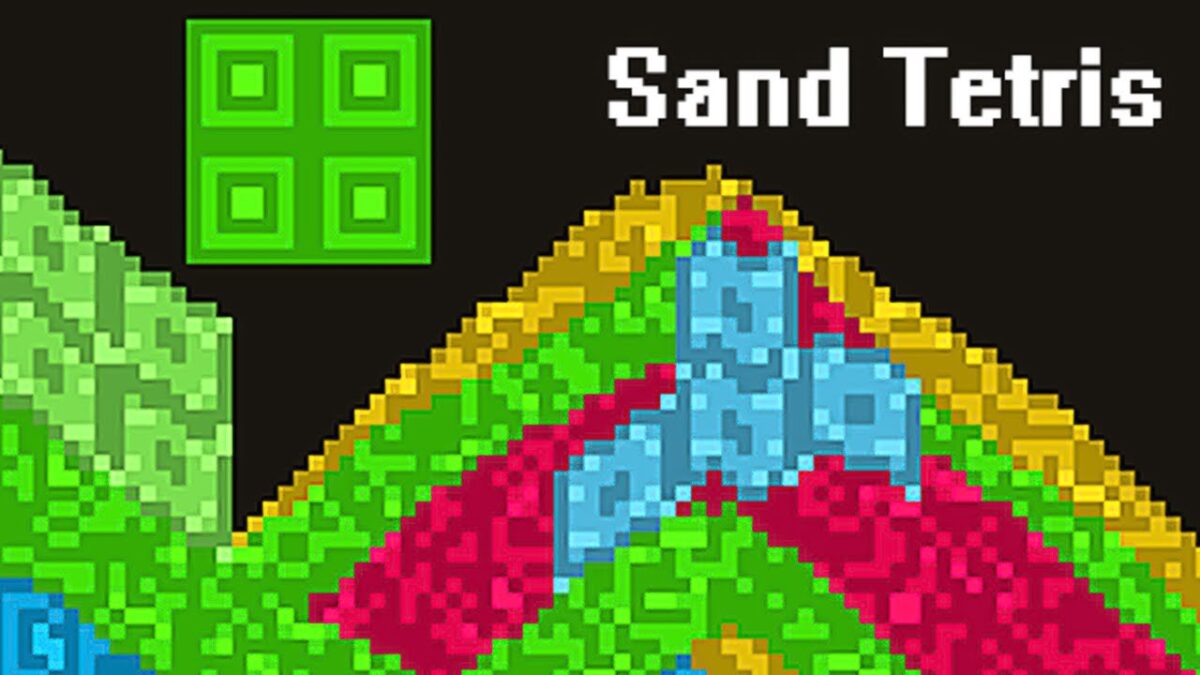
Tetris Sand is a physics-based simulation concept that combines traditional Tetris-style falling shapes with realistic sand behavior.
Unlike classic Tetris, where blocks lock firmly into place, Tetris Sand allows shapes to break apart, crumble, or behave like individual grains influenced by gravity. As pieces fall, they interact dynamically with the environment, creating ever-changing landscapes and patterns.
This combination produces a unique experience where players can:
- Build structures
- Experiment with physics
- Watch satisfying sand movements
- Create artistic designs
- Enjoy stress-free gameplay
The appeal comes from the balance between control and unpredictability. Players influence the environment, but the simulated physics create unexpected and often beautiful outcomes.
The Inspiration Behind Tetris Sand
To understand Tetris Sand, it helps to look at the two concepts that inspired it.
The Legacy of Tetris
Created by Russian programmer Alexey Pajitnov in 1984, Tetris became one of the most successful puzzle games in history.
The game’s core concept is simple:
- Geometric blocks fall from the top of the screen.
- Players rotate and position them.
- Complete horizontal lines disappear.
- The challenge increases over time.
Its elegant design made Tetris a global phenomenon and established many puzzle-game mechanics still used today.
The Rise of Sand Simulations
Sand simulation games gained popularity because they recreate natural physical behavior in digital environments.
These simulations often allow users to:
- Pour sand
- Build structures
- Observe gravity
- Create reactions between materials
- Experiment freely
Developers discovered that watching particles move realistically creates an unexpectedly calming and engaging experience.
Tetris Sand emerged as a natural evolution that merged these two ideas into a single interactive format.
Why Tetris Sand Is So Satisfying
One of the biggest reasons behind Tetris Sand’s popularity is its ability to trigger feelings of satisfaction and relaxation.
Visual Harmony
Humans are naturally attracted to organized patterns.
Watching particles settle into place creates a sense of completion that feels rewarding and comforting.
Predictable Yet Surprising
The physics engine follows logical rules, but the exact outcome is never fully predictable.
This balance keeps users engaged because every interaction feels fresh while remaining understandable.
Stress-Free Interaction
Unlike competitive games, many Tetris Sand experiences focus on exploration rather than winning.
There are often no timers, enemies, or penalties.
Users can simply enjoy watching shapes transform and settle naturally.
How Tetris Sand Works
The technology behind Tetris Sand relies on particle-based physics simulation.
Instead of treating a shape as a single solid object, the system breaks it into thousands of tiny particles.
Each particle follows physical rules such as:
- Gravity
- Friction
- Collision
- Density
- Pressure
When blocks fall, they gradually transform into flowing material that reacts realistically to the environment.
This creates stunning visual effects where structures continuously evolve and reshape themselves.
The Psychology Behind Tetris Sand
Researchers studying digital behavior have found that people often enjoy experiences that provide low-pressure interaction and visual stimulation.
Tetris Sand aligns perfectly with these psychological principles.
Pattern Recognition
The brain constantly searches for patterns.
When users observe particles organizing themselves into recognizable forms, the experience feels rewarding.
Flow State
Many users enter a state of deep concentration while interacting with Tetris Sand.
This phenomenon, often called “flow,” occurs when a task is engaging enough to hold attention but not so difficult that it creates stress.
Mindfulness Benefits
Watching slow, repetitive motion can help reduce mental clutter.
Many users describe Tetris Sand as similar to:
- Watching waves
- Observing rainfall
- Looking at a fireplace
- Drawing repetitive patterns
These activities encourage relaxation and present-moment awareness.
Educational Benefits of Tetris Sand
Although many people view Tetris Sand as entertainment, it also offers valuable learning opportunities.
Understanding Physics
Students can observe:
- Gravity
- Motion
- Density
- Material behavior
- Structural stability
These concepts become easier to understand when seen in action.
Encouraging Creativity
Tetris Sand promotes experimentation.
Users learn through trial and error while creating structures and observing outcomes.
Developing Problem-Solving Skills
Players frequently adjust designs and strategies based on how the particles behave.
This strengthens logical thinking and adaptability.
Tetris Sand and Digital Art
Artists have embraced Tetris Sand as a creative medium.
By controlling particle colors, movement, and placement, creators produce stunning visual experiences that combine:
- Animation
- Generative art
- Interactive design
- Motion graphics
Many viral videos feature colorful particle formations collapsing and reforming into intricate patterns.
The temporary nature of these creations adds to their beauty, making every design unique.
Why Tetris Sand Is Popular on Social Media
Platforms such as TikTok, YouTube Shorts, Instagram Reels, and Facebook have helped Tetris Sand gain widespread attention.
Short clips often generate millions of views because they:
- Capture attention immediately
- Create satisfying visual effects
- Encourage repeated viewing
- Appeal to audiences of all ages
Unlike many trends that rely on language or cultural context, Tetris Sand videos are universally understandable.
People simply enjoy watching the movement.
Tetris Sand as a Relaxation Tool
A growing number of developers are creating applications specifically designed for relaxation rather than competition.
Tetris Sand fits perfectly into this trend.
Many users launch these simulations to:
- Reduce stress
- Take mental breaks
- Improve focus
- Relax before sleep
- Practice mindfulness
This shift reflects a broader movement toward technology that supports well-being instead of constant stimulation.
The Future of Tetris Sand
As technology advances, Tetris Sand experiences are becoming increasingly sophisticated.
Future developments may include:
Virtual Reality
Users could physically manipulate sand-like particles in immersive 3D environments.
Augmented Reality
Digital sand structures may appear directly within real-world spaces.
Artificial Intelligence
AI could generate unique puzzles, landscapes, and particle interactions based on user preferences.
Educational Platforms
Interactive simulations could become valuable classroom tools for teaching physics, engineering, and mathematics.
These innovations have the potential to transform Tetris Sand from a niche concept into a widely used educational and entertainment medium.
Why Tetris Sand Continues to Fascinate People
At its core, Tetris Sand succeeds because it taps into something deeply human.
We enjoy creating order.
We enjoy observing motion.
We enjoy seeing patterns emerge from complexity.
Tetris Sand combines these instincts into a single experience that feels both playful and calming.
It offers creativity without pressure, interaction without stress, and beauty without complexity.
Conclusion
Tetris Sand is more than a simple digital trend. It represents a fascinating fusion of classic puzzle mechanics, realistic physics simulation, creative expression, and mindful interaction.
By blending the structured challenge of Tetris with the organic flow of sand, it creates an experience that appeals to gamers, artists, educators, and anyone seeking a moment of calm in a fast-paced digital world.
As technology continues to evolve, Tetris Sand is likely to remain a powerful example of how entertainment, creativity, and relaxation can come together in one beautifully satisfying experience.