

Table of Contents
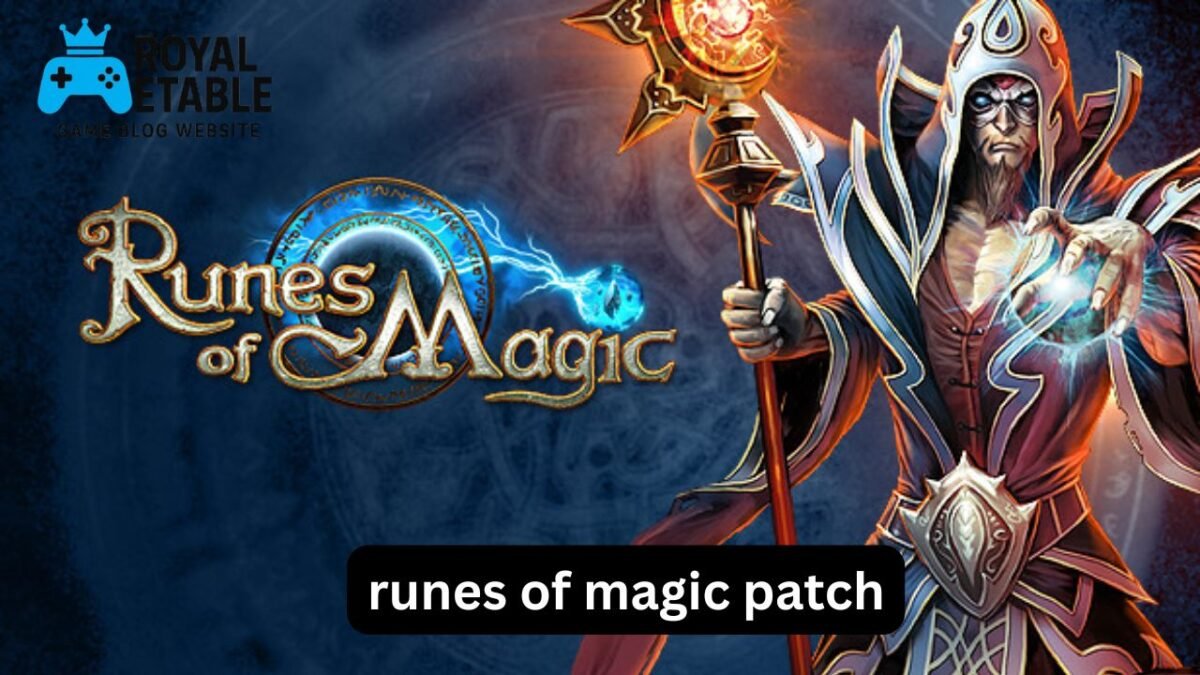
ToggleWhen Runes of Magic suddenly behaves differently after an update, the frustrating part is often not the patch itself—it is figuring out exactly what changed, whether the client installed correctly, and which “Runes of Magic patch” files are actually relevant to your version. Players returning after months or years can face an even bigger problem: old patch instructions may refer to files, launchers, or game versions that no longer match their installation.
This guide explains how to approach a Runes of Magic patch safely, including the difference between automatic updates, manual patches, and patch notes. It also covers common installation problems, version mismatches, and practical checks that can save you from repeatedly reinstalling the entire game.
The goal is simple: if you are looking for a Runes of Magic patch manual or trying to understand Runes of Magic patch notes, you should be able to determine what you need, what you can ignore, and what to check when an update goes wrong.
What Is a Runes of Magic Patch?
A patch is an update package that changes the installed game client. Depending on the release, it can contain bug fixes, balance adjustments, new content, technical changes, or files required to keep your client compatible with the current game servers.
For most players, patching happens automatically through the game’s launcher. You start the client, the launcher checks your installed version, downloads required files, and updates the installation.
A manual patch is different. Instead of relying entirely on the launcher to obtain the required update, you install a patch package yourself.
This can be useful when:
- The launcher repeatedly fails to download an update.
- Your connection to the normal patch server is unreliable.
- You have been given an offline or standalone patch package.
- You are maintaining an older installation.
- A specific game version requires a particular update sequence.
The important point is that a patch is version-dependent. Installing a patch intended for another client version can cause more problems than it solves.
Runes of Magic Patch Manual: What to Check First
Before installing a manual patch, identify the version currently installed on your computer.
This is the step players most often skip.
A typical mistake looks like this:
- A player searches for a patch.
- They find a file with a promising name.
- They download it.
- They run the patch.
- The installer reports that the patch cannot be applied.
The problem may not be the patch. It may simply be the wrong starting version.
Check Your Current Game Version
Look at the launcher or game client for the installed version information. Depending on the client build, the version may appear on the launcher, in an information/about area, or in local game files.
Write down the complete version number rather than relying on memory.
For example, if your installation is several updates behind, you need to know whether the manual patch is designed to upgrade:
Version A → Version B
or whether it expects:
Version C → Version D
Those are not interchangeable.
Check the Game Installation Folder
A manual patch normally needs to know where the game is installed.
If you have multiple installations—for example, an old backup and a newer installation—it is surprisingly easy to patch the wrong directory.
Before starting:
- Confirm the installation folder.
- Close the game and launcher.
- Avoid moving game files while patching.
- Make sure you have enough free disk space.
- If possible, keep a backup of important configuration files.
This is particularly useful when troubleshooting an older installation.
Automatic Patch vs Manual Patch
The two approaches solve slightly different problems.
| Method | Best for | Main advantage | Main risk |
|---|---|---|---|
| Automatic patch | Most players | Simple and convenient | Launcher/download failures |
| Manual patch | Troubleshooting or specific versions | More control | Wrong version or installation path |
| Full client reinstall | Severely damaged installation | Clean starting point | Takes much longer |
Automatic Patching
Automatic patching should generally be your first choice.
The launcher can determine which updates are required and normally handles the correct sequence automatically. This reduces the chance of applying an incompatible package.
If the launcher works normally, there is usually little reason to replace it with a manual procedure.
Manual Patching
Manual installation becomes more attractive when the normal process fails consistently.
However, “manual” does not mean “install any patch you find.”
You still need to establish:
Installed version → Required patch → Target version
That small chain is the most important part of the process.
How to Read Runes of Magic Patch Notes
Patch notes are not installation manuals.
They tell you what changed, while a patch package or manual explains how to apply the update.
Good patch notes typically contain several categories.
New Content
This can include:
- New areas
- Quests
- Dungeons
- Events
- Equipment
- Classes or class-related changes
- New systems
New content is usually the easiest part to notice after an update.
Balance Changes
Balance updates can be more important than new content for established players.
A patch may alter:
- Skill damage
- Cooldowns
- Resource costs
- Character statistics
- Item attributes
- Class mechanics
- Monster strength
A character that felt strong before an update may therefore perform differently even if no obvious feature has been added.
Bug Fixes
Bug fixes can be less visible but highly significant.
For example, a patch may fix:
- Quest progression problems
- Missing NPC interactions
- Incorrect item behavior
- Client crashes
- Graphical glitches
- Server synchronization issues
- Incorrect skill calculations
One useful habit is to read the bug-fix section even if you are primarily interested in new content. A “small” fix may directly address a problem you have been experiencing for weeks.
Technical Changes
Technical notes can explain launcher, compatibility, performance, or server-related modifications.
These are particularly relevant when troubleshooting an update.
If patch notes mention changes to the launcher or client infrastructure, repeatedly repairing the old installation may not be the correct solution.
A Practical Manual Patch Workflow
If you have a legitimate manual patch package and know it is intended for your installed version, use a cautious process.
1. Close the Game
Exit the game completely.
Also close the launcher if the patch instructions require it. Some patching systems cannot safely replace files while they are being used.
2. Confirm the Installation
Double-check that the patch is being directed toward your actual Runes of Magic installation.
This matters especially if you have:
- Multiple hard drives
- An old backup
- A second installation
- A copied game directory
3. Make Sure There Is Enough Space
A patch may need temporary storage in addition to the size of the downloaded package.
Therefore, a patch that appears to be only a few hundred megabytes can require substantially more free space while files are being unpacked or replaced.
4. Apply the Patch
Follow the instructions belonging to that specific patch.
Do not assume that a generic “copy these files” procedure applies to every Runes of Magic update.
5. Start the Launcher
Afterward, allow the launcher to verify the installation.
If it downloads additional files, that does not automatically mean the manual patch failed. The launcher may simply be completing subsequent updates or checking file integrity.
6. Test the Game
Check the things that matter to you:
- Can the launcher start?
- Does the game reach the login screen?
- Can you enter the game world?
- Are your characters accessible?
- Are previously problematic areas working?
- Did the client crash during startup?
Testing immediately makes troubleshooting much easier.
What to Do When a Runes of Magic Patch Fails
A failed patch does not necessarily mean the game installation is ruined.
Start with the simplest possibilities.
“Wrong Version” or Similar Error
This usually suggests a version mismatch.
Do not keep trying the same patch.
First establish the installed version and the version the patch expects.
Patch Stops Partway Through
Possible causes include:
- Insufficient disk space
- Corrupted downloaded files
- Permission problems
- Security software interfering with file changes
- Damaged installation files
- An incomplete previous update
Restarting repeatedly without identifying the cause usually wastes time.
Launcher Keeps Downloading the Same Update
This is one of the more annoying situations.
If the launcher repeatedly downloads the same files, check whether:
- The update actually completes.
- The launcher has permission to modify the installation.
- The installation folder is writable.
- Security software is blocking file replacement.
- The client is being launched from the expected installation directory.
If the problem persists, a clean repair or reinstall may eventually be more efficient than repeatedly forcing the same patch.
One Important Distinction: Patch Failure vs Server Problems
Not every update-related error is caused by your computer.
Suppose the launcher successfully updates, but you cannot log in afterward. That can be a very different problem from a patch that refuses to install.
Think of the process as three separate stages:
Patch download → Client installation → Server connection
A failure in stage three does not necessarily mean stage one or two was unsuccessful.
This distinction can save a lot of unnecessary reinstalling.
Common Mistakes Players Make
Using an Old Patch From an Unclear Source
A patch file can look legitimate simply because its filename contains the game’s name and a version number.
That does not establish compatibility.
Use a patch only when you can verify what version it targets and where it came from.
Skipping Intermediate Versions
Some manual update systems require sequential patches.
For example:
1.0 → 1.1 → 1.2 → 1.3
does not necessarily mean you can safely apply only the 1.3 package to version 1.0.
Never assume that a later patch includes every previous update unless its documentation explicitly says so.
Reinstalling Too Quickly
A reinstall is sometimes the right answer, but it should not be your first reaction to every patch error.
If the problem is simply an incompatible manual patch, reinstalling wastes time without addressing the underlying issue.
Ignoring Patch Notes
Patch notes are useful for troubleshooting because they tell you whether a problem is expected to have been addressed.
If a patch specifically mentions a crash, quest bug, class issue, or launcher problem that you experience, that information gives you a much better starting point.
Three Less-Obvious Things Worth Checking
Your “Old” Installation May Not Be Cleanly Old
A copied game folder can contain a mixture of files from different updates if files were manually replaced in the past.
That can produce unusual errors that are difficult to reproduce on a fresh installation.
If your installation has been manually modified many times, a clean installation can sometimes be more reliable than trying to identify every inconsistent file.
Successful Patching Does Not Guarantee a Healthy Client
A launcher can finish updating while another problem remains in the installation.
This is why the final test matters. Successfully downloading a patch is only one part of the process.
Patch Size Is Not a Good Indicator of Patch Importance
A small update can have a major gameplay effect.
A few changed configuration or data files can alter a skill, quest, item, or system without requiring a huge download.
Conversely, a large patch may mostly contain assets and technical files with little noticeable gameplay impact.
When Should You Use a Manual Patch?
A simple decision rule works well:
Use automatic updating when your launcher works normally.
Consider a manual patch when you have a verified patch package that specifically matches your installed version and automatic updating is not working.
Consider reinstalling when the installation is clearly corrupted, heavily modified, or repeatedly fails integrity checks after reasonable troubleshooting.
The key is to avoid treating manual patching as a shortcut around version compatibility.
FAQ
What is a Runes of Magic patch?
A Runes of Magic patch is an update that modifies the game client with new content, fixes, balance changes, or technical improvements. Most players receive patches automatically through the launcher. Manual patches are useful in specific troubleshooting or version-management situations.
Where can I find Runes of Magic patch notes?
Patch notes are normally associated with the game’s official update announcements and describe the changes included in a particular release. When researching an older patch, make sure the notes correspond to the same game version you are installing rather than a similarly named later update.
How do I install a Runes of Magic patch manually?
First determine your installed game version and verify that the manual patch is designed to update that version. Close the game, select the correct installation directory, ensure sufficient disk space, apply the patch according to its instructions, and then allow the launcher to verify the installation.
Why does my Runes of Magic patch say the version is incorrect?
The most common explanation is that the patch expects a different starting version than the one installed on your computer. Check the complete installed version and the patch’s required source and target versions before attempting another update.
Should I reinstall Runes of Magic if a patch fails?
Not immediately. First check the installed version, disk space, installation directory, permissions, and whether the patch is actually compatible. A reinstall becomes more reasonable when the installation is damaged or contains files from multiple inconsistent versions.
Why does the launcher keep patching after I installed a manual patch?
A manual patch may cover only one update stage, while the launcher still needs to download later updates or perform file verification. If it repeatedly downloads exactly the same files, however, that can indicate a damaged file, permission issue, or incomplete update.
Conclusion
The safest way to approach a Runes of Magic patch is to think in terms of versions rather than simply searching for the newest patch file. Your installed version, the patch’s starting version, and its target version all need to line up.
For most players, automatic updating remains the easiest option. Manual patching is most useful when the normal launcher process fails or when you have a verified update package for a specific client version. And when something goes wrong, separate patch installation problems from login or server problems before deciding to reinstall the entire game.
Most importantly, don’t judge a patch only by its download size or filename. Check what changed, what version it targets, and whether the update actually addresses the problem you’re trying to solve. That approach is faster, safer, and much less frustrating when working with an older game installation.