



Table of Contents
ToggleFinding a good pinball game can be surprisingly difficult. Some versions are designed for quick online play, others recreate classic arcade tables, and some are built specifically for Windows or younger players. If you remember the old Space-themed pinball game from Windows, you may also be looking for something that captures that same simple, satisfying feel without complicated controls.
This guide explains what makes a pinball game enjoyable, where different versions fit different needs, and what to look for when choosing between online, free, classic, Japanese, kids, and Windows options. It also covers how scoring works, why the ball behaves differently on different tables, and a few practical details that can make a basic game much more fun.
Whether you want a quick game during a break, a family-friendly option, or a modern alternative to the classic Windows experience, the goal is to help you understand your choices before you start playing.
What Is a Pinball Game?
A pinball game recreates the basic experience of a physical pinball machine in digital form.
The objective is straightforward: keep the ball on the table for as long as possible while hitting targets, ramps, bumpers, switches, and other scoring elements. Flippers near the bottom of the table let you control the ball and prevent it from falling into the drain.
Most digital pinball games follow the same basic loop:
- Launch the ball.
- Use the flippers to keep it in play.
- Hit targets and scoring objects.
- Activate bonuses or special modes.
- Avoid losing the ball.
- Try to improve your score.
The simplicity is part of the appeal. You can understand the controls in seconds, but mastering the timing and physics can take considerably longer.
Why Pinball Still Works So Well
Pinball has an unusual combination of luck, timing, reaction speed, and strategy.
A beginner can immediately understand what to do, but experienced players start thinking about where they want the ball to go rather than simply reacting to it.
For example, instead of hitting a flipper every time the ball approaches, an experienced player may deliberately allow the ball to roll toward a particular section of the table before making a controlled shot.
That creates two different experiences:
- Casual play: Keep the ball alive and enjoy the action.
- Skill-based play: Control shots, build combinations, and maximize scoring opportunities.
This is one reason a good pinball game can remain entertaining even when its basic controls have barely changed.
Pinball Game Online: What to Expect
An online pinball game is useful when you want to start playing without installing a large program.
Browser-based versions generally focus on accessibility. You open the game, learn a few keyboard controls, and begin playing.
They’re particularly convenient for:
- Short breaks
- Casual gaming
- Older computers
- Shared computers
- Players who don’t want complicated installations
However, online games can vary considerably in quality.
Before spending time on one, consider:
- How responsive the controls feel
- Whether the ball physics are believable
- How quickly the game loads
- Whether keyboard controls are clearly explained
- Whether the table is actually playable without unnecessary interruptions
A simple game with responsive flippers is often more enjoyable than a visually impressive game with delayed controls.
Pinball Game for Kids: What Makes One Suitable?
A pinball game for kids doesn’t necessarily need simplified physics. The most important factors are easy controls, readable objectives, and an appropriate difficulty level.
A child who has never played pinball should be able to understand the basic objective almost immediately.
Good beginner-friendly characteristics include:
- Simple flipper controls
- Clear scoring
- Forgiving gameplay
- Minimal complicated menus
- Easy-to-understand table layouts
- Short play sessions
You can also turn pinball into a useful introduction to basic cause and effect.
For example, children quickly notice that hitting a bumper changes the ball’s direction. With repeated play, they begin to recognize that different shots produce different results.
A Simple Way to Introduce Pinball
Instead of immediately focusing on high scores, give a young player small challenges:
First: Keep the ball alive for 30 seconds.
Next: Hit a particular target.
Then: Reach a specific score.
Finally: Try to beat their previous result.
This approach makes improvement more visible and prevents the game from feeling like a test they have to pass.
The Classic Windows Pinball Experience
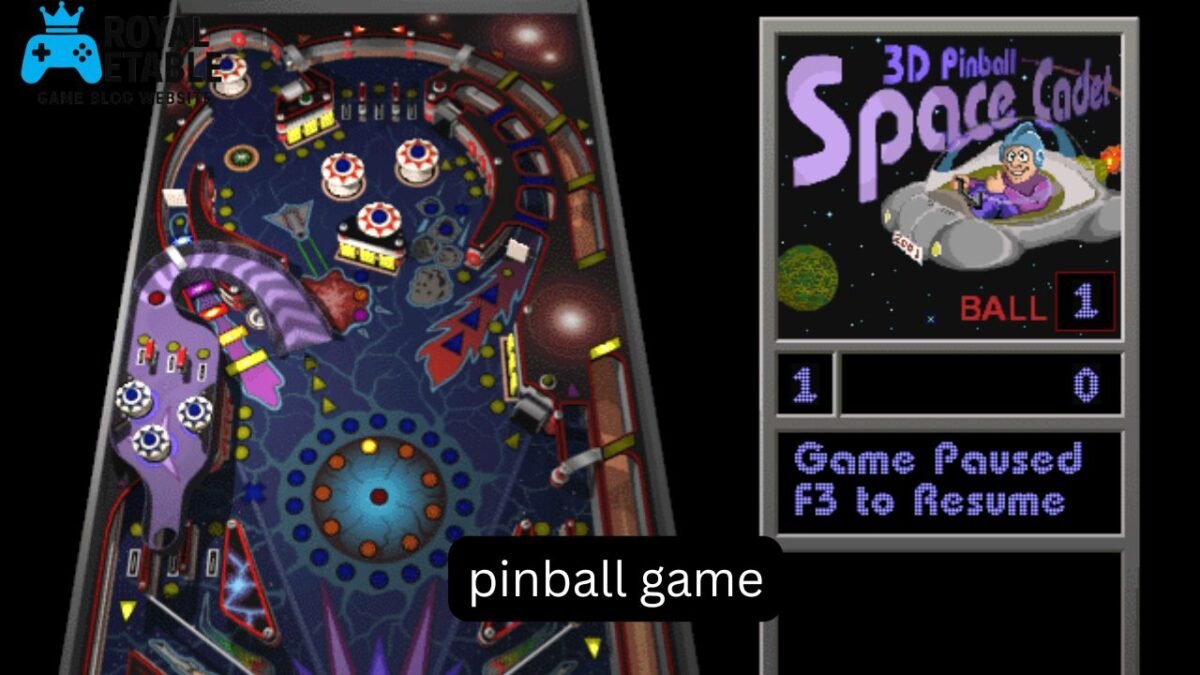
When people search for a pinball game Windows, they are often remembering 3D Pinball for Windows – Space Cadet.
It became particularly familiar to Windows users because it was included with certain versions of Microsoft Windows, especially Windows XP-era computers.
The Space Cadet table had a science-fiction theme and included missions, bumpers, ramps, targets, and different scoring opportunities.
What made it memorable wasn’t necessarily complexity. It was extremely easy to start.
You could sit at a computer, launch the ball, and understand the basic mechanics almost immediately.
Why Space Cadet Became So Memorable
There are several practical reasons the game developed such a strong nostalgic following:
- It was readily available on many home computers.
- It required very little learning.
- It worked well with a keyboard.
- Games could be completed in short sessions.
- The table offered enough depth for repeated play.
One interesting detail is that its popularity came partly from availability. Many people didn’t actively choose to install a pinball game—they simply discovered it on the computer they already used.
That made the game part of everyday computer culture for a generation of users.
Pinball Game Space: Why Space Themes Are So Popular
A space pinball game combines two naturally compatible ideas: fast-moving arcade action and science-fiction presentation.
Space-themed tables commonly use:
- Rockets
- Planets
- Satellites
- Space stations
- Aliens
- Missions
- Cosmic environments
But the theme is more than decoration.
A well-designed space table can use its theme to organize the player’s objectives. For example, a mission might require hitting several targets in sequence, with ramps representing different stages of the mission.
This gives the player something more meaningful to pursue than simply increasing the score.
Space Cadet vs Modern Space-Themed Tables
| Feature | Classic Space Cadet style | Modern space pinball |
|---|---|---|
| Controls | Very simple | Usually simple |
| Presentation | Retro | More elaborate |
| Objectives | Table-based missions | Often multiple modes |
| Learning curve | Low | Varies |
| Nostalgia | Very high | Depends on the game |
| Gameplay depth | Moderate | Often higher |
Neither approach needs to replace the other. The classic style is excellent for quick sessions, while modern tables can provide much more variety.
How Pinball Scoring Actually Works
At first, pinball scoring can look random. It isn’t.
Different table elements are assigned different values, and certain combinations can trigger bonuses.
Common scoring elements include:
Bumpers
These are usually circular objects that bounce the ball away when struck. They often award points and can create unpredictable changes in direction.
Targets
Targets are objects the ball must hit. Some are stationary while others may be arranged in sequences.
Ramps
Ramps send the ball into a different part of the table. Successful ramp shots can provide significant points or activate special features.
Lanes
Lanes guide the ball through specific paths and may contribute toward bonuses or multipliers.
Multiball
Multiball is one of the most exciting features in pinball. Multiple balls enter play simultaneously, creating more scoring opportunities but also making control substantially harder.
The important lesson is that more activity does not always mean better control. During multiball, protecting the flippers and avoiding unnecessary risks can be just as important as hitting scoring targets.
Old Pinball Game vs Modern Pinball
If you are deciding between an old pinball game and a modern version, the biggest difference isn’t necessarily graphics.
It is the design philosophy.
Older games often emphasize:
- Immediate gameplay
- Simple tables
- High-score chasing
- Straightforward controls
- Short sessions
Modern games may add:
- Story-driven missions
- Multiple tables
- Online leaderboards
- Advanced physics
- Custom rules
- More complicated scoring systems
For someone returning to pinball after many years, starting with a simple table can actually make more sense than jumping into an extremely complex simulation.
Once the basic timing feels natural, deeper tables become easier to appreciate.
What About Japanese Pinball Games?
The phrase Japanese pinball game can refer to several different things, so it is worth being precise.
Japan has a distinctive arcade and gaming culture surrounding mechanical and digital entertainment. Traditional Japanese pachinko, for example, shares some visual and mechanical similarities with pinball but is not simply the same thing as Western-style pinball.
Japanese digital pinball games can also have different presentation styles, themes, and rule systems.
If you’re searching specifically for Japanese pinball, check whether you’re looking for:
- Traditional Western-style pinball
- Japanese digital pinball
- Pachinko
- Anime-themed pinball
- Japanese arcade adaptations
This distinction matters because searching for one category can easily return results from another.
How to Play Pinball Better
Improving at pinball isn’t only about having faster reactions.
The biggest improvement usually comes from learning ball control.
1. Don’t Hit the Flippers Too Early
A common beginner mistake is pressing the flipper as soon as the ball approaches it.
Instead, watch its trajectory.
Wait until you have a clearer idea of where the ball is going, then make the appropriate shot.
2. Learn the Table
After several games, notice where the ball commonly travels.
Ask yourself:
- Which targets are easy to reach?
- Which shots are risky?
- Where does the ball usually drain?
- Which ramp gives the best reward?
- What activates a bonus?
Knowing the table reduces unnecessary reactions.
3. Use Controlled Shots
When possible, don’t simply hit the ball as hard as possible.
A controlled shot can place the ball into a specific lane or target area.
This becomes especially useful when the game has missions or sequences.
4. Protect the Center
Many beginners focus so much on hitting targets that they forget the most important objective: keeping the ball away from the drain.
A lower-scoring shot that keeps the ball safe can be more useful than a risky shot worth many points.
Three Less-Obvious Pinball Insights
The Highest Score Isn’t Always the Best Learning Strategy
If you’re learning a new table, chasing the maximum score immediately can make you repeat the same mistakes.
A better practice method is to focus on one mechanic at a time—such as controlling the left flipper or learning a particular ramp.
Table Knowledge Can Matter More Than Reaction Speed
Fast reactions help, but knowing where the ball is likely to go can reduce the number of emergency reactions you need.
Experienced players often appear calm because they are anticipating the ball rather than constantly reacting to it.
Simple Tables Can Have Better Replay Value
A complicated table isn’t automatically more entertaining.
A well-balanced simple table can encourage repeated attempts because the player quickly understands the rules and can clearly see improvement from one session to the next.
That’s one reason classic pinball games continue to attract players even when modern games offer considerably more features.
Common Pinball Mistakes
If you’re new to digital pinball, watch out for these habits:
Randomly hitting both flippers:
This often creates uncontrolled rebounds and makes it harder to predict the ball.
Ignoring the table rules:
Some targets exist specifically to trigger bonuses or missions. Understanding them can dramatically change your strategy.
Always going for the hardest shot:
Difficult shots can be rewarding, but repeated failed attempts can cost more balls than they earn.
Focusing only on score:
Pay attention to how the ball behaves. Learning its patterns will generally help your score improve naturally.
Changing games too quickly:
If a table feels difficult after one attempt, give yourself several rounds to learn it.
Choosing a Free Pinball Game
A pinball game free option can be perfectly adequate if your goal is simply casual entertainment.
Before choosing one, consider what you actually want.
| Your goal | Look for |
|---|---|
| Quick online play | Simple browser table |
| Nostalgia | Classic-style table |
| Kids | Easy controls and forgiving gameplay |
| Serious practice | Accurate physics |
| Space theme | Mission-based sci-fi table |
| Variety | Multiple tables |
| Short sessions | Fast loading and simple rules |
The key is not whether a game is free or paid. It is whether its controls, physics, table design, and difficulty match what you want from the experience.
FAQ
What is the best way to play a pinball game online?
Look for a browser game with responsive controls, clear instructions, and stable ball physics. A simple table can be more enjoyable than one overloaded with unnecessary features. For casual play, quick loading and easy keyboard controls are particularly useful.
Can children play pinball games?
Yes. Pinball is generally easy to understand because the basic objective is simply to keep the ball in play and score points. For younger players, choose tables with straightforward controls and avoid unnecessarily complicated scoring systems.
What was the old Windows pinball game called?
The classic Windows title many users remember was 3D Pinball for Windows – Space Cadet. It featured a science-fiction table with missions, ramps, targets, and scoring challenges. Its inclusion with certain Windows versions made it particularly familiar to PC users.
Are Japanese pinball games the same as pachinko?
No. Western-style pinball and Japanese pachinko are different forms of entertainment, although they share some mechanical similarities. Japanese digital pinball can also refer to games that use traditional pinball mechanics rather than pachinko rules.
Can you play pinball games for free?
Yes, free pinball games are available in several forms, including browser-based games and free versions of digital tables. The experience varies considerably, so check the controls, table design, and gameplay quality rather than choosing based solely on the word “free.”
Final Thoughts
A good pinball game doesn’t need complicated controls to be engaging. The basic combination of timing, physics, risk, and scoring creates a surprisingly deep experience from a very simple concept.
If you’re looking for nostalgia, a classic Windows-style table can provide that familiar arcade feeling. For children, a straightforward table with forgiving gameplay is easier to learn. Space-themed tables add missions and science-fiction personality, while modern versions can offer significantly more depth.
The most useful approach is to choose the type of pinball experience that matches your goal, then spend enough time learning the table rather than judging it after one short session. Once you start recognizing ball paths and controlling your shots, pinball becomes much more strategic—and considerably more satisfying.
