


Table of Contents
ToggleIf you enjoy games where creativity matters as much as winning, marble run the game offers a refreshing change from fast-paced action titles. Instead of simply following a fixed path, many marble run games let you build tracks, experiment with ramps and turns, and then watch the marble respond to your design. That combination makes the genre surprisingly satisfying: a track can look perfect on paper but fail immediately once the marble starts rolling.
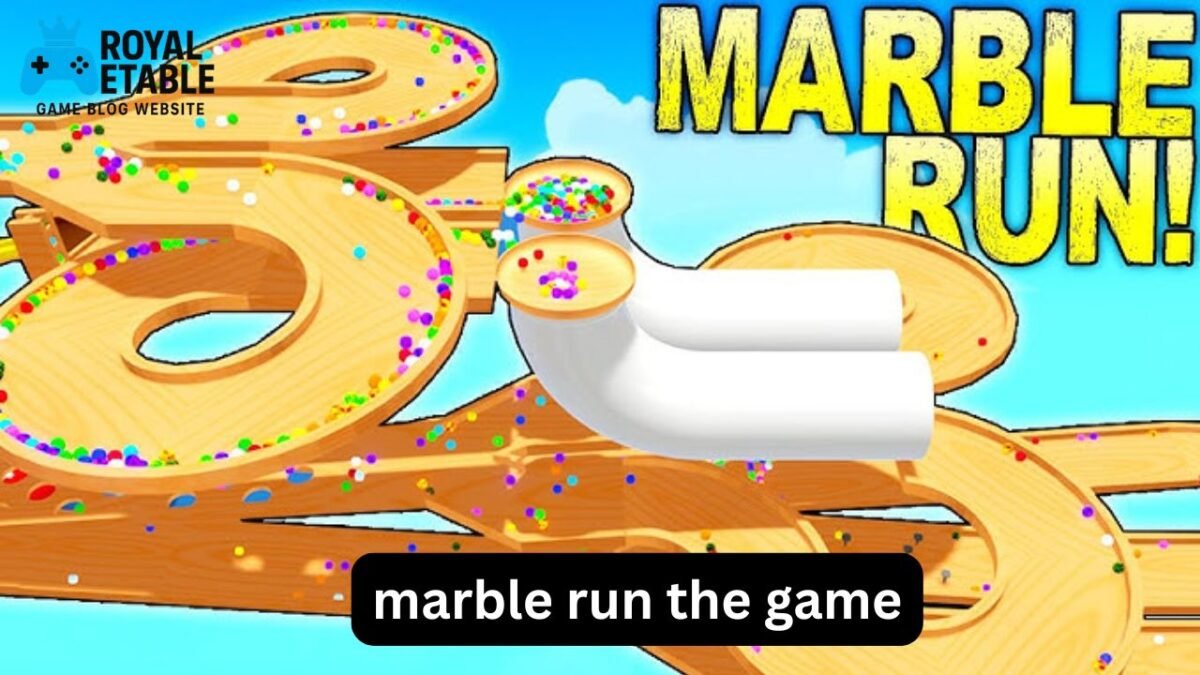
The phrase “marble run the game” can refer to several different games, but the most recognizable version is a physics-based building game in which players construct marble tracks from different pieces. One well-known Marble Run lets players create tracks from a large selection of components and test them immediately. It has appeared across browser, mobile, and PC platforms.
This guide explains how marble run games work, what makes a good track, common mistakes that cause failures, and several practical techniques that can make your builds more reliable and interesting.
What Is Marble Run the Game?
Marble Run the Game is generally a physics-based building or racing game where players create, control, or compete on tracks designed for rolling marbles.
There is not just one game carrying the phrase “marble run.” Several titles use similar names but have very different gameplay.
For example, the PS Games version focuses heavily on construction. Players assemble track pieces, adjust their layouts, and watch the marble travel through the finished creation. The game includes different categories of pieces, including turns, dips, and other track components.
Other versions turn the concept into a racing challenge. Marble Run: Ultimate Race, for example, focuses on controlling a marble through obstacles, jumps, narrow paths, moving platforms, and other hazards.
So before searching for tips, it helps to identify which type you are playing:
- Building games: You design the track yourself.
- Racing games: You control a marble through pre-designed courses.
- Puzzle games: You rearrange pieces to create a successful route.
- Platforming games: You directly control a rolling marble through obstacles.
- Simulation games: You concentrate more on constructing elaborate marble systems.
The underlying attraction is the same: gravity, momentum, collisions, and track design determine what happens next.
How Does Marble Run Gameplay Work?
The basic idea is simple.
You start with either an empty construction area or a predefined track. Depending on the game, you then place pieces, move the marble, or guide it toward a target.
In a construction-focused version, the typical process is:
- Choose a track piece.
- Place it on the building surface.
- Rotate or reposition it.
- Connect it to another piece.
- Create a continuous route.
- Start the marble.
- Observe where the track succeeds or fails.
- Modify the design and test again.
The important part is that testing is part of the building process, not something you do only after finishing.
In the PS Games version, players can use the play function to test their creations and remove some or all pieces when a design does not work.
That makes the game feel closer to a small engineering experiment than a conventional level-based game.
The Most Important Part: Understanding Marble Physics
A beginner often looks at the track visually.
An experienced player watches the marble’s movement.
A marble doesn’t simply follow whatever path looks attractive. Its behavior depends on factors such as:
- Gravity
- Slope
- Momentum
- Speed
- Direction changes
- Collisions
- Track width
- Jumps and drops
- Surface geometry
This is why a steep section can create a problem several pieces later.
Imagine you create this sequence:
steep ramp → sharp turn → narrow bridge
The ramp may successfully increase speed, but the marble could enter the turn too quickly and fly off the bridge.
The solution isn’t necessarily to remove the ramp. You might instead need a transition section that gradually changes direction or reduces the marble’s speed.
Think in Sections, Not Individual Pieces
One useful way to design a track is to divide it into sections:
Start → acceleration → control → challenge → recovery → finish
This is more reliable than randomly connecting attractive pieces.
For example:
- The start gives the marble enough momentum.
- The acceleration section increases speed.
- The control section prepares the marble for a difficult turn.
- The challenge creates the main obstacle.
- The recovery section catches the marble after the challenge.
- The finish provides a clean ending.
This approach makes long tracks much easier to troubleshoot.
How to Build a Better Marble Run Track
1. Start With a Reliable Route
Don’t begin with the most complicated design you can imagine.
First build a basic route from the starting point to the finish.
Test it.
If the marble reaches the end consistently, start adding interesting elements.
This gives you a working foundation instead of trying to debug ten problems simultaneously.
2. Test Difficult Sections Early
One of the biggest time-wasters is building an entire track before testing its hardest section.
Suppose you want a marble to make a jump from one platform to another.
Build that section first.
Test it several times.
If the marble only succeeds occasionally, the design isn’t reliable enough yet.
Then adjust the height, angle, distance, or approach speed before connecting the section to the rest of the track.
3. Avoid Sudden Direction Changes
Sharp turns are entertaining, but they are also common failure points.
A marble carrying significant momentum may continue moving forward even after the track turns.
Instead of:
straight → immediate 90° turn
try:
straight → gentle curve → tighter curve
The gradual transition gives the marble more opportunity to follow the intended direction.
4. Use Speed Strategically
Fast isn’t always better.
A high-speed marble can make:
- Jumps more dramatic
- Long sections more exciting
- Ramps more effective
But excessive speed can also cause:
- Missed turns
- Track exits
- Uncontrolled bouncing
- Failed landings
- Chain reactions
A good marble run usually contains a mixture of fast and controlled sections.
Why Long Tracks Are Not Automatically Better
This is one of the less obvious lessons of marble run games.
A longer track can be impressive, but length alone doesn’t make a track good.
A 20-piece track that works perfectly can be more enjoyable than a 200-piece track that constantly fails.
The original MARBLE RUN project took a particularly interesting approach: users could contribute their own tracks to a collaborative marble run, increasing the overall length and unlocking additional special bricks as the project grew.
That idea highlights an important design principle:
Progress should create new possibilities, not simply make the track longer.
When building your own course, consider adding variety instead of unnecessary distance.
Building Challenges That Actually Feel Fun
A good challenge should make the player think:
“Can I do this?”
It shouldn’t immediately make them think:
“This is impossible.”
Try combining different mechanics.
Speed Challenge
Give the marble a long downhill section followed by a difficult corner.
Precision Challenge
Use a narrow section where controlling the marble’s direction becomes important.
Timing Challenge
Introduce a moving platform or rotating element.
Recovery Challenge
Let the marble survive a jump but require it to land accurately on the next section.
Risk-and-Reward Challenge
Create two routes:
- A safe, slower route
- A difficult, faster route
This gives players a meaningful choice rather than forcing one solution.
A Practical Method for Troubleshooting Failed Tracks
When a marble fails, don’t immediately rebuild everything.
Instead, ask where the failure begins.
Suppose the marble falls off at piece 25.
Watch the previous few pieces carefully.
Maybe the real problem begins at piece 21, where the marble enters a turn too quickly.
This is a useful distinction:
Failure point ≠ cause of failure.
The visible mistake may happen several pieces after the actual design problem.
Use the “Last Good Position” Method
Run the marble repeatedly and identify the last location where its movement still looks correct.
Then inspect everything after that point.
Check:
- Is the marble entering too quickly?
- Is the direction changing too suddenly?
- Is the track too narrow?
- Is there an unexpected collision?
- Does the marble leave the surface?
- Is the next piece positioned correctly?
This method saves a surprising amount of trial and error.
Marble Run Building vs Marble Racing
The two major styles provide very different experiences.
| Feature | Building Marble Run | Racing Marble Run |
|---|---|---|
| Main goal | Create a working track | Finish the course |
| Main skill | Design and planning | Timing and control |
| Pace | Usually relaxed | Usually faster |
| Creativity | Very high | Moderate |
| Physics experimentation | High | Moderate |
| Replay value | New track designs | Better performance |
| Best for | Builders and creative players | Competitive players |
A building game is usually more relaxing because you control the environment.
A racing game creates more pressure because the environment is already designed and your job is to survive it.
Common Marble Run Mistakes
Building Without Testing
This is probably the biggest mistake.
A beautiful track can still be mechanically broken.
Better approach: Test every major section before expanding it.
Making Everything Too Steep
Steep slopes look exciting, but they can create excessive speed.
Better approach: Alternate acceleration areas with control sections.
Using Too Many Obstacles
More obstacles don’t automatically mean better gameplay.
Better approach: Give each major obstacle a purpose.
Ignoring Recovery Areas
After a difficult jump or turn, the marble needs somewhere to stabilize.
Better approach: Add a wider or calmer section after difficult mechanics.
Fixing the Wrong Piece
If the marble falls at piece 30, piece 30 may not be the problem.
Better approach: Trace the marble’s movement backward until you find where its behavior first changes.
Three Less-Obvious Insights About Marble Runs
1. Reliability Is More Important Than Complexity
A track that succeeds 95% of the time often feels better than one that succeeds only 30% of the time but looks spectacular.
Players naturally want to understand why something works.
If success feels completely random, frustration replaces satisfaction.
2. The Best Tracks Have a Rhythm
Think of a track like a roller coaster.
Constant intensity becomes tiring.
A stronger design might follow:
calm → fast → technical → calm → dramatic → finish
That rhythm makes the difficult sections feel more meaningful.
3. Failure Can Be Designed Into the Fun
Failure isn’t necessarily bad.
A jump that is slightly difficult can make players want another attempt.
The important distinction is between challenging failure and confusing failure.
If players understand why they failed, they’ll usually try again.
If they have no idea what went wrong, they’ll probably quit.
Who Is Marble Run the Game Best For?
Marble run games can appeal to several types of players.
Creative Players
If you enjoy constructing things and experimenting with different layouts, building-focused marble games are a natural fit.
Casual Players
The basic concept is easy to understand, making many marble games suitable for short sessions.
Puzzle Fans
Planning the correct route requires spatial reasoning and problem-solving.
Simulation Fans
Players interested in physics can spend considerable time experimenting with slopes, momentum, and track geometry.
Younger Players
Simple marble-run mechanics can also introduce basic ideas about gravity, motion, sequencing, and cause and effect.
The educational potential is especially interesting because the player isn’t simply reading about physics—they can observe the consequences of changing a design.
Tips for Beginners
If you’re opening a marble run game for the first time, use this simple progression:
First: Build a short track.
Second: Make sure the marble reaches the end.
Third: Add one difficult feature.
Fourth: Test that feature repeatedly.
Fifth: Add another section only after the previous one works.
Sixth: Introduce visual or mechanical complexity after the basic route is reliable.
This prevents the most common beginner problem: creating a huge track that nobody can troubleshoot.
Is Marble Run the Game Free?
That depends on which marble run game you mean.
Some versions are available to play in a web browser, while other versions have appeared on mobile devices and PC platforms. The PS Games version, for example, is listed for browser, iOS, Android, and Steam, although availability and pricing can vary by platform.
There are also newer mobile games using the Marble Run name with racing-focused mechanics. One current example describes one-touch controls, obstacles, moving platforms, competing marbles, rewards, and unlockable tracks.
Therefore, don’t assume that every game called “Marble Run” is the same title.
FAQ
What is the main goal of Marble Run the Game?
The goal depends on the version, but building-focused games generally ask you to create a track that successfully carries a marble from its starting point to the finish. Racing versions instead emphasize controlling a marble through obstacles and reaching the finish before opponents.
Is Marble Run the Game a physics game?
Yes, physics is central to many marble run games. Gravity, momentum, collisions, slopes, and track geometry determine how the marble moves. In building versions, understanding these behaviors is often more important than simply placing the largest number of track pieces.
How do you make a marble run work consistently?
Start with a simple route and test each difficult section separately. Avoid abrupt turns after high-speed sections, and give the marble enough space to recover after jumps or complicated obstacles. If the marble fails, look several pieces before the visible failure to identify the actual cause.
Can you play Marble Run online?
Some versions can be played directly in a web browser. The PS Games version, for example, is listed as browser-compatible, while other Marble Run titles are available through mobile or PC platforms.
Is Marble Run good for kids?
Simple marble-run games can be useful for children because they encourage experimentation, spatial reasoning, sequencing, and basic understanding of cause and effect. However, suitability depends on the specific game’s controls, difficulty, advertising, and age rating.
Why is Marble Run so satisfying?
The appeal comes from seeing an idea become a working system. You make a change, start the marble, and immediately see the physical consequence. When a complicated section finally works after several attempts, the success feels earned because the player solved the problem rather than simply completing a predetermined action.
Conclusion
Marble Run the Game is more than a simple rolling-ball concept. The best versions combine creativity, physics, problem-solving, and experimentation into a gameplay loop that is easy to understand but surprisingly deep.
If you’re building tracks, focus on reliability before complexity. Test difficult sections early, manage speed, avoid abrupt transitions, and always look for the real cause behind a failure rather than changing random pieces.
And perhaps the most useful mindset is this: don’t build the longest track you can—you build the most interesting track you can make work.
Once you start thinking about momentum, rhythm, recovery areas, and meaningful challenges, marble run games become less about placing pieces and more about designing a small physical system that actually behaves the way you intended.