

Table of Contents
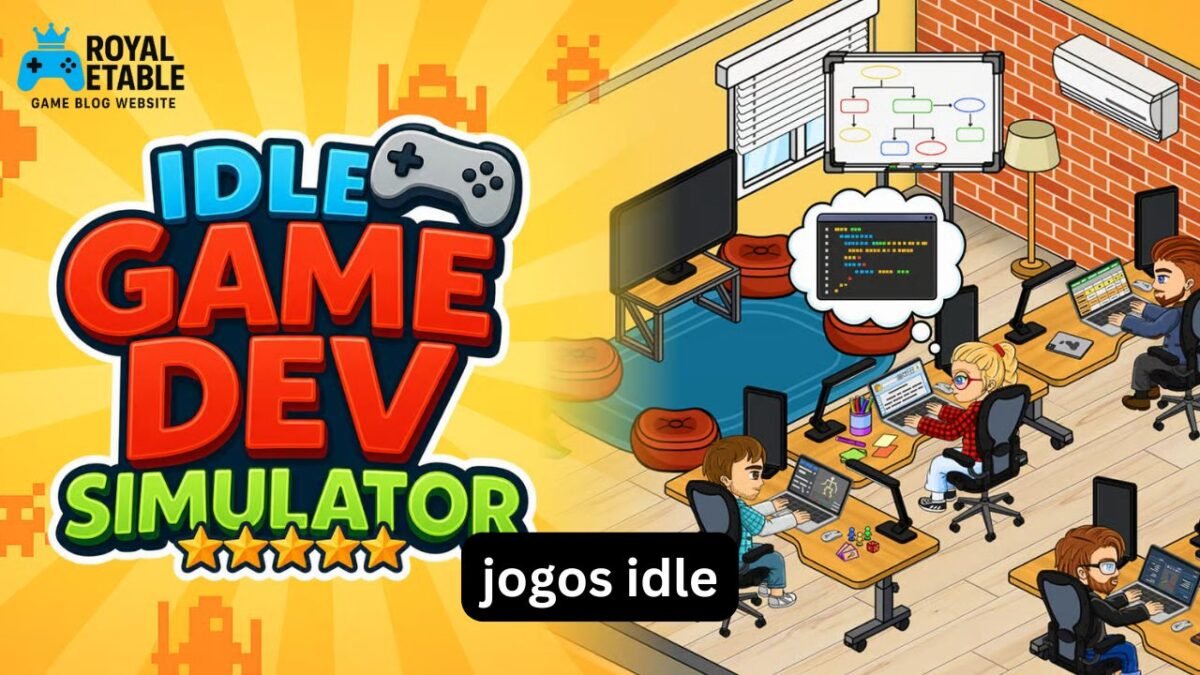
ToggleHave you ever opened a game, played for a few minutes, closed it, and then returned later to discover that your resources had kept growing? That simple idea is the heart of jogos idle, commonly called idle games or incremental games in English.
These games are designed for people who enjoy progression without having to remain glued to the screen. You usually start with a small amount of income, production, or power, then invest those resources into upgrades that make future progress faster. Over time, even a short session can lead to surprisingly large gains.
But idle games are not simply games that “play themselves.” The interesting part is deciding what to upgrade, when to reset, which bonuses to prioritize, and how to build an efficient progression strategy.
This guide explains how jogos idle work, the different types you will encounter, what makes them addictive without requiring constant attention, and how to get better results from your time. It also covers common mistakes and several less obvious mechanics that experienced idle-game players learn to recognize.
What Are Jogos Idle?
Jogos idle are games built around automatic progression. After you establish a source of income or production, the game can continue generating resources while you are actively playing and, in many cases, while you are away.
A typical idle game follows a simple loop:
- Start with a basic resource-producing activity.
- Collect resources.
- Purchase an upgrade or automated producer.
- Increase your production rate.
- Unlock new systems.
- Eventually reset or “prestige” for permanent bonuses.
- Repeat the process at a much faster rate.
For example, imagine a game where you earn one coin every second. You spend 50 coins to hire a worker who produces five coins per second. Later, you buy another upgrade that doubles your workers’ production.
The individual actions are simple, but the decisions become increasingly important as the numbers grow.
That is why idle games are often described as incremental games: the main objective is to make numbers grow, then use that growth to create even faster growth.
How Do Idle Games Work?
The easiest way to understand an idle game is to think of it as an economic system.
You have income, expenses, investments, and eventually compounding growth.
Early in a game, almost every upgrade feels useful. Later, the difference between a good purchase and a bad one can become enormous.
Automatic Production
Most idle games have one or more automated systems.
These might represent:
- Workers
- Businesses
- Factories
- Farms
- Characters
- Mining operations
- Magical generators
- Space stations
- Creatures
- Virtual currencies
The theme changes, but the underlying principle is usually similar: something produces a resource continuously.
Upgrades
Upgrades increase your efficiency.
An upgrade might:
- Increase production per second
- Reduce production costs
- Multiply all income
- Increase offline earnings
- Unlock another producer
- Improve critical rewards
- Speed up timers
The strongest upgrades are often multipliers rather than simple additions.
For example, increasing production from 100 to 120 is helpful. A 2× multiplier that turns 100 into 200 can be much more powerful, especially when several multipliers eventually stack together.
Offline Progress
Offline progression is one of the defining features of many jogos idle.
You leave the game, return several hours later, and receive accumulated resources.
However, offline income is not always equal to what you would have earned by actively playing. Some games impose caps, reduced rates, or special bonuses for returning after a certain period.
This creates an interesting rhythm: build → leave → return → upgrade → build again.
Why Are Idle Games So Popular?
The appeal is partly psychological, but it is also practical.
Not everyone wants a game that demands 30 minutes of uninterrupted concentration. Idle games provide a sense of progress while fitting around everyday life.
You might play one while:
- Taking a short break
- Commuting
- Waiting for something
- Relaxing before bed
- Checking your phone between tasks
The strongest idle games also create a satisfying feeling of transformation. You begin with almost nothing, and eventually your tiny operation becomes enormously productive.
Progress Without Constant Pressure
A traditional action game may punish you for putting the controller down.
An idle game often does the opposite.
Leaving can actually become part of the strategy.
You might deliberately close the game after making a series of upgrades because you know your next return will provide enough resources to unlock another major milestone.
That makes the game feel less like a task and more like a long-term progression project.
Main Types of Jogos Idle
Not every idle game plays the same way. Understanding the major categories makes it easier to find one that matches your preferences.
Incremental Clicker Games
These are usually the simplest form.
You perform a basic action repeatedly, such as clicking, tapping, or collecting something. Eventually, automated systems take over much of the work.
They are easy to understand and usually good for short sessions.
Idle Tycoon Games
These games combine idle mechanics with management.
You may operate:
- Restaurants
- Hotels
- Shops
- Factories
- Airports
- Businesses
The objective is generally to expand operations and increase profits.
These games are particularly satisfying if you enjoy optimization and watching a small operation become a large one.
RPG Idle Games
Idle RPGs combine automatic progression with character development.
Your characters may automatically fight enemies while you focus on:
- Equipment
- Skills
- Character upgrades
- Team composition
- Resources
- Boss progression
They can be more complicated than traditional clickers because strategic choices have a larger effect on performance.
Idle Strategy Games
These put greater emphasis on planning.
Instead of simply buying the most expensive available upgrade, you may need to determine which combination produces the strongest long-term result.
Some include research trees, multiple currencies, resets, factions, or branching progression systems.
The Most Important Concept: Exponential Growth
One of the reasons idle games can become surprisingly deep is compounding progression.
Suppose your production looks like this:
- 10 resources per second
- 20 per second
- 40 per second
- 80 per second
- 160 per second
At first, the numbers seem modest. But after enough upgrades, the same system can move from thousands to millions or billions.
The important lesson is that an upgrade should not always be judged by its immediate benefit.
An upgrade producing 10% more resources might look weaker than one producing 50 extra resources. But if that 10% bonus affects every future production source, it could eventually become far more valuable.
A Practical Upgrade Strategy
One of the easiest mistakes in idle games is buying whatever becomes affordable first.
Instead, ask three questions.
1. What Does This Upgrade Multiply?
Multipliers deserve special attention.
An upgrade that affects one building is useful. An upgrade that affects every building can change your entire economy.
2. How Quickly Does It Pay for Itself?
Consider the cost versus additional income.
For example, if an upgrade costs 10,000 coins and adds 1,000 coins per minute, its basic payback period is around ten minutes.
That does not mean you should always buy it immediately, because another upgrade might provide better growth. But payback time is a useful way to compare options.
3. Does It Unlock Something Bigger?
Some purchases are valuable because they unlock an entirely new mechanic.
A modest upgrade that opens a research system, prestige feature, or powerful production chain can be more important than a larger short-term income increase.
Prestige: The Mechanic That Changes Everything
Many advanced idle games eventually introduce prestige or a similar reset system.
At first, resetting sounds terrible.
Why would you willingly give up hours of progress?
The answer is that prestige usually gives you a permanent bonus.
For example:
You reset your current progress and receive prestige points. Those points permanently increase future production.
This creates a loop:
Build → reach a plateau → reset → gain permanent power → rebuild faster → reach a higher plateau.
A common beginner mistake is waiting far too long before using prestige.
Another mistake is resetting too early.
The best reset point depends on the game’s mechanics. In many cases, the ideal moment is when the permanent reward meaningfully reduces the time required to reach your previous progress.
A Less Obvious Insight: Time Is Also a Resource
Players often think about coins, gems, energy, or production.
Experienced players also think about time.
Suppose Upgrade A gives you a 20% production increase immediately. Upgrade B unlocks a new producer but takes 30 minutes to become worthwhile.
If you only have five minutes to play, A may be better.
If you are planning to leave the game overnight, B could produce substantially more value.
This means the best decision depends not only on the numbers on screen, but also on when you plan to return.
That is an important distinction between casual play and efficient idle-game strategy.
Offline Earnings: Don’t Ignore the Return Cycle
Offline rewards are sometimes treated as free money, but they can influence how you should play.
If a game has a maximum offline-storage period, leaving it untouched for several days may waste potential production.
For example, imagine the game stores only eight hours of offline earnings. Leaving it for 24 hours does not necessarily give you three times the reward.
A practical routine is to check the game’s offline cap and build a schedule around it.
If you know you will be away for six hours, an upgrade that improves offline production can be more useful than one that only benefits active play.
Common Mistakes Beginners Make
Buying Everything Immediately
Having enough currency does not mean you should spend it.
Compare the expected benefit of each purchase before committing your resources.
Ignoring Multipliers
New players often focus on visible production numbers and overlook percentage-based bonuses.
Once your production becomes large, multipliers can dominate your entire economy.
Resetting at the Wrong Time
Prestige systems reward experimentation, but resetting after only a tiny amount of progress may produce almost no meaningful advantage.
Wait until the permanent reward has enough impact to accelerate the next run.
Playing Too Actively
This sounds strange for an idle game, but it happens frequently.
Some players repeatedly check the game every few minutes even when there is nothing important to do.
If the game is designed around waiting, use that feature. You do not need to turn an idle game into a second job.
Spending Premium Currency Without a Plan
Premium resources are often difficult to replace.
Before spending them, determine whether the purchase provides a permanent advantage, temporary convenience, or cosmetic benefit.
How to Choose a Good Idle Game
If you are trying jogos idle for the first time, consider what kind of experience you want.
Choose a simple clicker if:
- You want quick sessions.
- You dislike complicated systems.
- You mainly enjoy watching numbers increase.
Choose an idle RPG if:
- You enjoy characters and equipment.
- You like building teams.
- You want more strategic decisions.
Choose an idle tycoon if:
- You enjoy management.
- You like economic progression.
- You want to expand businesses or production chains.
Choose a deeper incremental game if:
- You enjoy optimization.
- You like mathematical progression.
- You want systems that continue evolving after the early game.
Are Idle Games Actually Games?
This is one of the more interesting debates around the genre.
Critics argue that a game that plays itself offers limited interaction. Supporters argue that the interaction happens at a different level.
You are not necessarily controlling every action. Instead, you are controlling the system that performs those actions.
That makes idle games surprisingly similar to management and strategy games.
The fun comes from asking:
- Which system should I improve?
- When should I reset?
- What should I prioritize?
- How can I reach the next milestone faster?
- Is this upgrade better now or later?
The gameplay is therefore less about reflexes and more about decision-making over time.
Three Advanced Insights Many Beginners Miss
Small Bonuses Can Become Enormous
A 5% improvement may look insignificant during the first hour. But if it affects multiple systems and remains permanent through several prestige cycles, its cumulative value can become substantial.
Do not judge permanent bonuses only by their immediate appearance.
The Best Upgrade Is Not Always the Most Expensive
Price often creates an illusion of value.
A 1-million-coin upgrade is not automatically better than a 100,000-coin upgrade. What matters is the additional production relative to its cost and the systems it affects.
Think in terms of efficiency, not price.
Idle Games Have Different “Speeds”
Two players can have the same amount of resources but very different progression efficiency.
One player may optimize for short active sessions. Another may optimize for overnight accumulation. A third may repeatedly prestige to maximize long-term growth.
There is no universally perfect strategy because the best strategy depends on how you actually play.
Jogos Idle vs Traditional Games
| Feature | Idle Games | Traditional Games |
|---|---|---|
| Main focus | Progression and optimization | Direct interaction |
| Time commitment | Usually flexible | Often more active |
| Offline progress | Common | Rare |
| Reflexes | Usually unimportant | Often important |
| Long-term progression | Very important | Varies |
| Automation | Central mechanic | Usually limited |
| Strategy | Resource-focused | Can involve combat, puzzles, tactics, etc. |
Neither approach is inherently better.
If you want immediate action and challenge, an idle game may feel too passive. If you enjoy gradual progression and optimization, the genre can be remarkably satisfying.
FAQ
What does “jogos idle” mean?
“Jogos idle” is Portuguese for idle games. These are games where resources, money, characters, or other forms of progress can continue developing automatically, often while the player is away. Many also include upgrades, automation, and prestige systems.
Are idle games free to play?
Many idle games are free to start, particularly on mobile and in browsers. However, some include optional purchases, advertisements, premium currencies, or time-saving mechanics. A free game can still be enjoyable without spending money, but the design of monetization varies considerably between titles.
What is the difference between idle and incremental games?
The terms overlap heavily. Idle games generally emphasize automatic or offline progression, while incremental games focus more broadly on repeatedly increasing production through upgrades and increasingly powerful systems. Many modern games can accurately be described as both idle and incremental.
How do you progress faster in idle games?
Focus on upgrades that improve overall production rather than simply buying the most expensive available item. Pay attention to multipliers, unlocks, prestige rewards, and the amount of time required for an upgrade to pay for itself. Also consider whether you are optimizing for active play or offline progress.
When should you prestige in an idle game?
The best prestige timing depends on the specific game. Generally, you want to reset when the permanent reward you receive will make the next progression cycle substantially faster. Waiting too long can waste time, while resetting too frequently can sacrifice useful progress.
Can idle games be played without spending money?
Yes. Many idle games can be played without purchasing premium currency. The main trade-off may be slower progression or fewer convenience features. If you want a completely free experience, check whether optional purchases are genuinely unnecessary for normal progression before investing significant time in the game.
Conclusion
Jogos idle are much more than games that generate resources while you are away. At their best, they turn time, automation, upgrades, and strategic decisions into a surprisingly deep progression system.
The key is to stop looking only at the biggest number on the screen. Consider production efficiency, multipliers, offline time, upgrade payback, and the long-term value of prestige rewards.
And perhaps the biggest advantage of the genre is flexibility. You can play for two minutes, make a few smart decisions, close the game, and come back later to continue building.
If you enjoy watching a small system gradually become powerful while making increasingly meaningful optimization choices, idle games are worth exploring.