



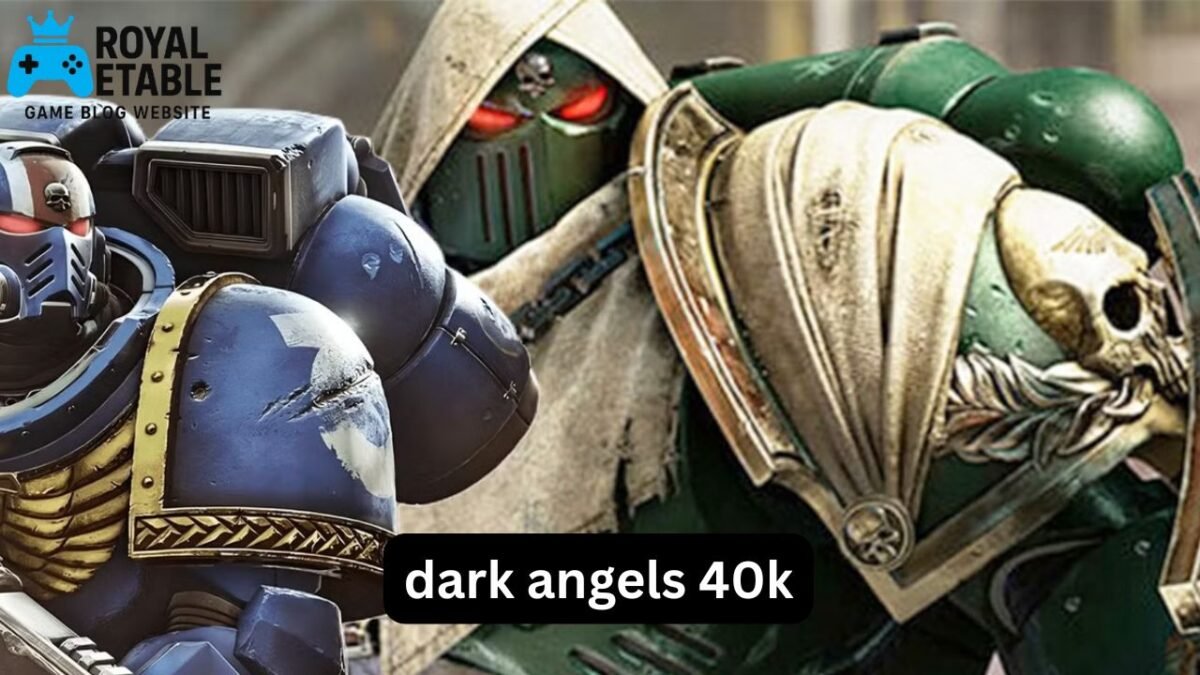
The Dark Angels are one of the most distinctive Space Marine factions in Warhammer 40,000, but getting into them can feel surprisingly complicated. You quickly encounter names such as the Deathwing, Ravenwing, Lion El’Jonson, the Fallen, ancient heraldry, and several different Dark Angels 40K models. The result is a faction with a huge amount of character—but also plenty of details that are easy to mix up.
This guide breaks down the Dark Angels 40K identity from the ground up. You’ll learn who they are, why their army is divided into specialized formations, how the Deathwing and Ravenwing fit into the wider chapter, and why their primarch matters so much. We’ll also look at Dark Angels heraldry, miniatures, army-building considerations, and practical ways to make the faction feel coherent on the tabletop.
Whether you are considering your first Dark Angels army or simply want to understand the lore behind the models, this guide focuses on the details that actually make the faction interesting.
Who Are the Dark Angels in Warhammer 40K?
The Dark Angels are a First Founding Space Marine Chapter descended from the First Legion of the Emperor’s Space Marines.
They are based around a culture of secrecy, loyalty, ritual, and atonement. Their history stretches back to the Great Crusade and Horus Heresy, making them one of the oldest and most influential Space Marine forces in the setting.
At first glance, they can look like a traditional knightly Space Marine army. That description is accurate, but incomplete.
Their defining characteristic is the burden of their past.
During the Horus Heresy and the destruction of Caliban, a portion of the Legion became associated with the traitorous Fallen. The Dark Angels have spent the following millennia hunting these individuals and keeping the truth hidden from outsiders.
That secret shapes almost everything about the chapter.
Why Are They Called the Unforgiven?
The Dark Angels and their successor chapters are collectively known as the Unforgiven.
The name reflects their obsession with correcting the spiritual and historical wound created by the Fallen.
This gives the army an unusual character. They are not simply fighting for the Imperium in every battle. They are also constantly pursuing their own internal objective: finding those responsible for the ancient betrayal and forcing them to answer for it.
That tension between duty and secrecy is central to Dark Angels lore.
The Dark Angels Primarch: Lion El’Jonson
The primarch of the Dark Angels is Lion El’Jonson, one of the Emperor’s genetically engineered sons.
The Lion was raised on Caliban, a world dominated by enormous forests and dangerous creatures. His upbringing among knightly orders strongly influenced the culture that later became associated with the Dark Angels.
He was an exceptional military commander, but his personality was complicated.
The Lion tends to be portrayed as:
- Extremely disciplined
- Strategic and calculating
- Proud
- Suspicious
- Intensely loyal
- More comfortable with actions than explanations
His relationship with other primarchs was often complicated, particularly because the Dark Angels operated with a degree of secrecy even during the Great Crusade.
The Lion and the Modern Dark Angels
The return of Lion El’Jonson fundamentally changed the modern Dark Angels story.
His reappearance provides the chapter with something it had lacked for thousands of years: direct leadership from its original primarch.
For players, this also makes the Lion an important centerpiece for a modern Dark Angels army.
He is more than a powerful character model. His presence connects the current army directly to the chapter’s origins.
Deathwing: The Dark Angels’ Elite Warriors
When people search for Dark Angels 40K Deathwing, they are usually looking at the chapter’s most famous elite formation.
The Deathwing is traditionally associated with the chapter’s first company and specializes in heavily armoured warfare.
The classic Deathwing appearance is dominated by bone-colored Terminator armour.
That creates one of the most recognizable visual identities in Warhammer 40K.

Why Is Deathwing Armour Bone-Colored?
The bone-colored armour is not simply a random alternative paint scheme.
It is connected to an important chapter tradition involving the Deathwing’s history and sacrifice.
This is one of the reasons Dark Angels players often treat Deathwing models differently from their standard green-armoured brothers.
On the tabletop, the contrast is immediately recognizable:
Dark Angels green + Deathwing bone + Ravenwing black
That three-part visual language is one of the easiest ways to understand the faction.
What Makes Deathwing Different?
Deathwing units traditionally emphasize:
- Heavy armour
- Durability
- Elite infantry
- Close-range firepower
- Close combat
- Terminator warfare
A Deathwing-heavy force therefore feels very different from an army built around fast Ravenwing units.
If you enjoy slowly advancing elite troops that can absorb punishment, Deathwing is an obvious part of the Dark Angels appeal.
Ravenwing: Speed and Reconnaissance
The other major formation is the Ravenwing, traditionally the chapter’s second company.
Where Deathwing represents heavily armoured elite warriors, Ravenwing emphasizes speed.
Ravenwing units commonly use:
- Bikes
- Fast attack vehicles
- Reconnaissance elements
- Rapid-response units
Their traditional armour is black.
This creates a useful thematic contrast:
| Formation | Traditional colour | Main identity |
|---|---|---|
| Deathwing | Bone | Elite heavy infantry |
| Ravenwing | Black | Speed and mobility |
| Main Dark Angels | Dark green | Core chapter forces |
The formations aren’t merely cosmetic sub-factions. They represent different military roles within the chapter.
Dark Angels 40K Models: What Should You Buy?
One of the biggest questions for a new player is where to begin with Dark Angels models.
The answer depends heavily on what you enjoy playing.
If You Like Elite Armies
Start by exploring Deathwing units.
Terminators give you the classic heavily armoured Dark Angels experience and look excellent alongside the Lion or other chapter characters.
The downside is that elite armies can be less forgiving when every individual model represents a significant portion of your army.
If You Prefer Speed
Ravenwing is the natural choice.
Fast-moving units allow you to pressure different areas of the battlefield and create threats your opponent must answer.
This style can be particularly appealing if you dislike slow armies.
If You Want a Balanced Collection
A mixed Dark Angels force is arguably the most representative option.
You can combine:
- Core green-armoured Space Marines
- Deathwing elites
- Ravenwing elements
- Characters
- The Lion as a centerpiece
This approach also gives you more variety when painting.
Dark Angels 40K Heraldry Explained
Heraldry is one of the details that makes Dark Angels miniatures particularly rewarding to paint.
The chapter has a strong connection to medieval knightly imagery, so shields, robes, swords, winged symbols, chapter badges, robes, and personal markings all fit naturally into the aesthetic.
However, heraldry can become confusing because Dark Angels units may communicate several things simultaneously.
A marking can indicate:
- Company
- Squad
- Veteran status
- Battlefield role
- Personal honour
- Chapter affiliation
- Connection to Deathwing or Ravenwing traditions
You don’t need to memorize every heraldic convention before painting your first miniature.
A practical approach is to establish a simple visual system.
For example:
- Green armour = standard Dark Angels
- Bone armour = Deathwing
- Black armour = Ravenwing
- White/red details = accent colours
- Robes = knightly character
- Wings and swords = chapter symbolism
Consistency matters more than absolute historical precision.
Dark Angels 40K Art and Visual Identity
Dark Angels artwork tends to combine two seemingly different themes: ancient knights and futuristic super-soldiers.
That contrast is deliberate.
You see:
- Gothic architecture
- Medieval swords
- Hooded robes
- Heraldic shields
- Wings
- Ancient-looking insignia
- Massive futuristic weapons
- Power armour and Terminator suits
The result is a faction that looks almost like a futuristic knightly order.
This is particularly useful when building an army because you can push the visual theme without making the models feel out of place.
A Useful Painting Insight
A common mistake is trying to make every Dark Angels miniature equally elaborate.
That can actually weaken the army’s visual impact.
A better approach is to create hierarchy:
- Ordinary troops: simpler details
- Veterans: more heraldry and robes
- Characters: maximum detail
- Primarch: strongest visual centerpiece
This makes the army easier to paint while making the important models stand out more.
Building a Dark Angels 40K Army
When building a Dark Angels army, think about roles rather than individual models first.
Ask yourself:
How will this army win games?
You generally need some combination of:
- Objective control
- Damage dealers
- Durable units
- Mobility
- Characters or support
- Units capable of responding to different threats
A Deathwing-heavy army can provide durability but may struggle with mobility.
A Ravenwing-focused army can move quickly but may not offer the same feeling of concentrated resilience.
A mixed army can cover more situations but requires more planning.
The Most Practical Starting Method
Instead of purchasing everything that looks interesting, build a small core first.
Then play several games.
After each game, ask:
- Did I have enough mobility?
- Did I lose objectives too easily?
- Were my elite units doing enough?
- Did I have too many expensive units?
- Could I reach distant objectives?
- Which unit actually performed better than expected?
This approach is much more reliable than building an army entirely from theory.
Dark Angels vs Other Space Marine Chapters
The Dark Angels are still Space Marines, but their identity separates them from many other chapters.
Dark Angels vs Ultramarines
Ultramarines are often associated with disciplined, flexible conventional warfare and the broader ideals of the Codex Astartes.
Dark Angels are more secretive and specialized.
Their distinctive formations and obsession with the Fallen give them a much stronger internal narrative.
Dark Angels vs Blood Angels
Blood Angels emphasize nobility, artistry, speed, and the struggle against their genetic flaws.
Dark Angels emphasize secrecy, duty, knightly tradition, and atonement.
Both have strong melee traditions, but their personalities are very different.
Dark Angels vs Space Wolves
Space Wolves lean heavily into Norse-inspired warrior culture.
Dark Angels lean toward medieval knightly imagery.
If you like swords, heraldry, robes, gothic symbolism, and secretive warrior orders, Dark Angels are probably the closer match.
Three Less-Obvious Insights About Dark Angels
1. Their army is really built around three different military philosophies
It is easy to think of Deathwing and Ravenwing as simply two types of units.
A better interpretation is that they represent different answers to battlefield problems.
Deathwing asks:
How do we survive and dominate a dangerous area?
Ravenwing asks:
How do we reach the enemy before they can react?
The wider chapter asks:
How do we maintain a flexible fighting force while protecting our secrets?
That makes mixed Dark Angels armies particularly interesting.
2. Heraldry can tell a story without changing the rules
Two models can have exactly the same battlefield role but feel completely different because of their markings.
Giving veterans unique shields, personal symbols, campaign markings, or distinctive robes can make an army feel like an actual collection of warriors rather than identical miniatures.
This is especially valuable if you enjoy narrative gaming.
3. The colour scheme naturally creates visual battlefield hierarchy
Dark Angels are unusually good at communicating battlefield roles through colour alone.
A large group of green Marines establishes the army’s foundation.
Bone Deathwing immediately looks elite.
Black Ravenwing instantly communicates speed.
This means the army can remain visually coherent even when its units look dramatically different.
Common Dark Angels Mistakes
New players often make a few predictable mistakes.
Buying Models Before Choosing a Playstyle
A miniature may look incredible but still not fit the army you actually want to play.
Choose your preferred style first.
Making Everything a Character Model
Dark Angels encourage elaborate painting, but excessive decoration can make the army visually chaotic.
Save the most complicated work for leaders and veterans.
Ignoring Mobility
A force packed with durable infantry can look impressive but may have difficulty responding to objectives and fast opponents.
Even an elite army needs a plan for movement.
Treating Lore as an Obligation
You don’t have to know every detail of the Fallen, Caliban, or chapter history before enjoying Dark Angels.
Learn the lore gradually.
Start with the parts that interest you most.
Are Dark Angels Good for New Warhammer 40K Players?
Yes—but they are particularly appealing to players who enjoy both gameplay and lore.
They offer several different ways to build an army, while their visual identity gives you plenty of freedom for painting and customization.
They are a good choice if you enjoy:
- Elite Space Marines
- Terminators
- Bikes and fast units
- Knightly aesthetics
- Gothic science fiction
- Detailed miniatures
- Character-driven lore
- Flexible army collections
They may be less suitable if you want the simplest possible Space Marine army with minimal faction-specific background.
FAQ
What are the Dark Angels in Warhammer 40K?
The Dark Angels are one of the original First Founding Space Marine Legions and Chapters. They are known for their secretive culture, knightly traditions, and pursuit of the Fallen. Their modern identity includes the Deathwing and Ravenwing formations.
Who is the Dark Angels’ primarch?
The Dark Angels’ primarch is Lion El’Jonson. He was raised on Caliban and became one of the Emperor’s most important military commanders during the Great Crusade. His return in the modern era has made him central to the chapter’s current story.
What is the Deathwing in Dark Angels 40K?
The Deathwing is the Dark Angels’ elite first-company formation, traditionally associated with Terminator armour and bone-colored armour. It specializes in heavily armoured elite warfare and is one of the most recognizable parts of the faction.
Why do Dark Angels have different armour colours?
The different colours represent important traditions and formations within the chapter. Standard Dark Angels are traditionally associated with dark green, Deathwing with bone, and Ravenwing with black. The contrast helps communicate the faction’s distinct military organizations.
Are Dark Angels good for a first Warhammer 40K army?
They can be an excellent first army if you like their aesthetic and lore. The main challenge is deciding whether you prefer Deathwing, Ravenwing, or a balanced force before buying too many models. Starting with a manageable core and expanding after playing games is usually the safest approach.
What makes Dark Angels different from other Space Marines?
Their combination of knightly culture, secrecy, the Fallen, Deathwing, Ravenwing, and Lion El’Jonson gives them an unusually layered identity. They can also visually combine green, bone, and black-armoured units while still looking like one coherent army.
Conclusion
Dark Angels 40K is much more than a green Space Marine army. The faction combines ancient knightly traditions with futuristic warfare, while its Deathwing and Ravenwing formations provide dramatically different approaches to battle.
The most important thing to understand is the relationship between the parts: the Dark Angels provide the foundation, Deathwing brings elite durability, Ravenwing brings speed, and Lion El’Jonson connects the modern chapter to its ancient origins.
If you’re collecting the faction, don’t feel pressured to build everything at once. Choose the playstyle and visual identity you enjoy, build around it, and let the army develop naturally. That’s where the Dark Angels become especially rewarding—not just as a competitive force, but as a collection with its own history and personality.