

Table of Contents
ToggleThere’s something strangely satisfying about watching things fall perfectly into place — from puzzle pieces fitting neatly together to grains of sand cascading in mesmerizing patterns. Imagine combining both sensations into one hypnotic experience. That’s where tetris sand comes in — a modern digital marvel that fuses the logic of Tetris with the meditative calm of flowing sand.
In a world overwhelmed by chaos and noise, this simple yet captivating concept has captured the imagination of gamers, artists, and mindfulness enthusiasts alike. It’s not just a game or a visual effect; it’s a reflection of how order and randomness coexist — beautifully, and often unexpectedly.
The Origins of a Timeless Obsession
Before exploring the allure of tetris sand, it’s worth revisiting the origins of the legendary game that inspired it — Tetris. Created in 1984 by Russian software engineer Alexey Pajitnov, Tetris was a minimalist puzzle game that became a global sensation.
The premise was simple: falling geometric shapes, or “tetrominoes,” needed to be rotated and arranged to form complete lines. But within that simplicity lay infinite complexity — a delicate balance between logic, timing, and anticipation.
Fast forward to today, and the spirit of Tetris has evolved into countless forms — from mobile apps to art installations. Yet, the core idea remains timeless: how we bring structure to chaos. That philosophy set the stage for the creation of tetris sand — a digital playground where the tactile beauty of physics meets the intellectual challenge of puzzles.
The Birth of Tetris Sand
In recent years, the internet has been flooded with creativity born out of curiosity — sandbox-style simulations that let people manipulate virtual worlds. From realistic fluid dynamics to interactive sandboxes, these digital tools invite players to experiment freely, no rules attached.
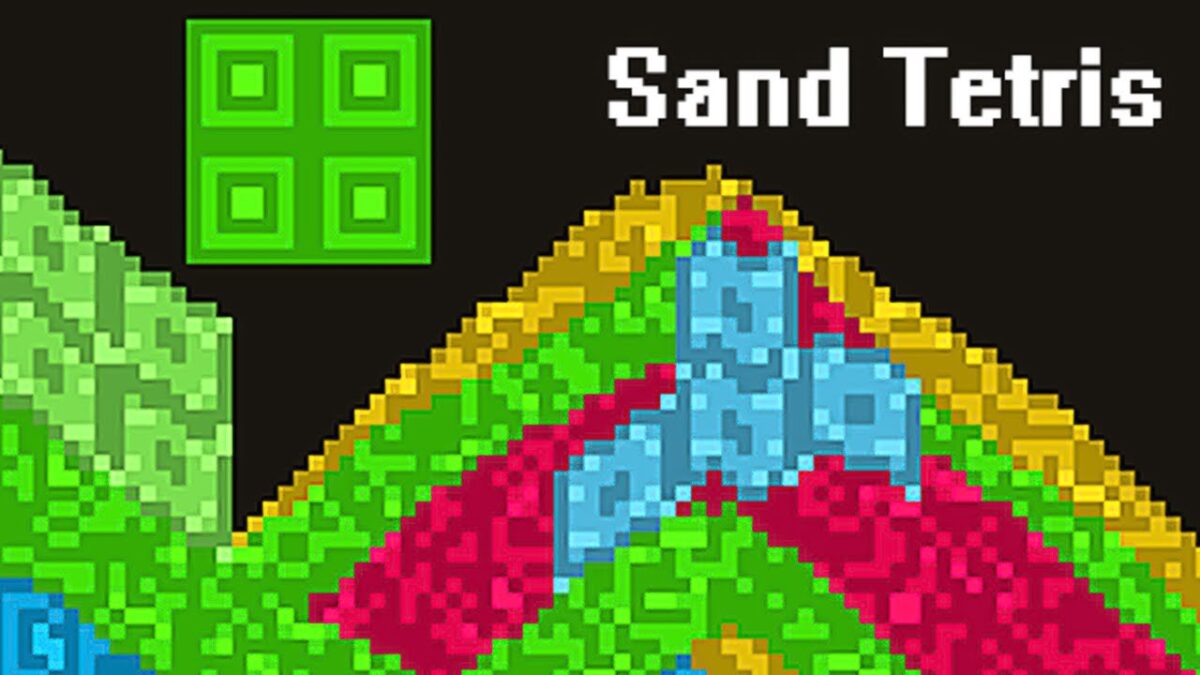
Among them emerged a phenomenon known as tetris sand — a playful yet strangely poetic blend of physics simulation and puzzle solving. It draws inspiration from both the falling-block mechanics of Tetris and the soothing nature of sand physics games.
Picture this: blocks and grains move fluidly under digital gravity, forming shifting landscapes that react to your every move. Instead of rigid pieces snapping into place, shapes crumble, flow, and settle — like sand finding its home after a gust of wind.
It’s part puzzle, part relaxation, and part art.
The Digital Alchemy of Tetris Sand
At its heart, tetris sand captures something profoundly human — our fascination with patterns and motion. It’s a digital environment where every movement feels alive, every collapse feels organic, and every interaction feels satisfying.
The technology behind it combines physics-based simulation and procedural generation. Each “grain” behaves individually, following gravity and friction, yet collectively forms structures that seem purposeful. The result is a mesmerizing dance of pixels that feels both chaotic and harmonious.
What makes this concept so captivating is its ability to blur boundaries — between control and surrender, design and randomness. You can shape the sand, drop blocks, or simply watch as the digital landscape evolves on its own. In a way, it mirrors life: no matter how much we plan, the world always finds its own flow.
The Science Behind the Satisfying Flow
The human brain is wired to find pleasure in patterns. Neuroscientists call it “predictive coding” — our brain constantly tries to predict what comes next. When those predictions are met with just the right amount of surprise, it releases dopamine — the chemical of satisfaction.
That’s exactly what happens when you interact with tetris sand. Each grain or block moves in ways that feel natural yet slightly unpredictable, creating an endless loop of curiosity and gratification.
The combination of Tetris’s structure and sand’s fluidity stimulates both the logical and emotional sides of the mind. It’s logical enough to engage your problem-solving instincts but random enough to trigger wonder. This delicate balance makes it more than a game — it’s an experience.
Why We Can’t Look Away
From social media feeds to meditative apps, short looping videos of falling sand or cascading colors have become digital comfort food. Watching sand flow in Tetris-like formations taps into a universal sense of calm — similar to the satisfaction of arranging, cleaning, or organizing.
The soothing rhythm of tetris sand offers a micro-escape from the mental clutter of daily life. In seconds, it can shift your focus from anxiety to awe. The repetition becomes a ritual, the motion a form of mindfulness.
In a fast-moving world, this simple act of watching sand and blocks merge provides a moment of stillness — a gentle reminder that even in chaos, beauty exists.
The Psychology of Digital Relaxation
Modern life has blurred the line between rest and stimulation. We scroll endlessly, chase notifications, and rarely let the mind pause. That’s why visual and tactile simulations like tetris sand are so effective — they provide an active form of relaxation.
Unlike traditional games that demand speed or competition, tetris sand invites you to slow down. It engages your senses without overwhelming them. The repetitive flow of movement quiets intrusive thoughts, allowing the brain to enter a state of “active rest.”
Researchers often compare this experience to the benefits of doodling, knitting, or watching a fireplace. Your hands or eyes stay engaged while your mind drifts freely — a balance of focus and freedom that nurtures creativity.
The Artistic Side of Motion
Beyond relaxation, tetris sand has become a medium for digital artists and creators. By manipulating color, density, and gravity, artists create dynamic scenes that feel alive — sandscapes that shift and morph in real time.
Some craft intricate mosaics that collapse beautifully, while others design geometric towers that crumble into cascading rivers of grains. The impermanence is part of the appeal — like a sand mandala, the beauty lies in its transience.
Each creation exists for a moment and then vanishes, leaving behind only memory and movement. In this way, tetris sand bridges the gap between digital art and meditation — a visual poem made of pixels and patience.
The Connection to Nature
One reason tetris sand resonates so deeply is its resemblance to natural phenomena. Watching virtual sand fall or settle evokes the same satisfaction as observing waves, clouds, or snowfall. It’s the digital echo of nature’s rhythms — a small piece of the infinite, contained on a screen.
Humans are inherently drawn to these organic patterns. Psychologists call it biophilia — our innate love for nature and its fractal forms. Even in digital spaces, we seek the comfort of natural movement.
When you interact with tetris sand, you’re not just playing a game — you’re engaging with an elemental force. Each grain, though artificial, behaves according to the same laws that shape rivers and deserts. The result is something timelessly familiar yet entirely new.
From Screens to Souls: The Meditative Impact
Meditation often focuses on breath, stillness, or sound. But for a growing number of people, visual meditation — like watching flowing patterns or shifting colors — offers a gateway to mindfulness.
Tetris sand fits perfectly into this modern meditation movement. Its slow, rhythmic interactions encourage presence. As you watch or guide the sand, your awareness drifts naturally into the moment. The repetition becomes soothing; the unpredictability keeps it engaging.
Many users describe entering a state of “flow” — where time fades, and thought gives way to sensation. It’s an elegant paradox: a digital tool helping people disconnect from the digital overload around them.
The Educational Potential
Beyond relaxation and art, tetris sand also has surprising educational value. Teachers and learners have used such simulations to explain principles of physics, geometry, and even psychology.
Students can observe how shapes settle, how gravity affects density, or how patterns emerge from chaos. These visual experiences make abstract concepts tangible. They demonstrate that even randomness has rules — and that beauty can emerge from equations.
In classrooms and online learning environments, interactive sand simulations have become tools for sparking curiosity, creativity, and critical thinking.
A Bridge Between Play and Mindfulness
What sets tetris sand apart from other digital experiences is its unique fusion of play and peace. It invites experimentation without consequence — a space where you can fail gracefully.
Every collapse becomes an opportunity to rebuild, every flow a reminder of impermanence. This mindset reflects deeper life lessons:
- Adaptability: The sand never resists change; it simply reshapes itself.
- Patience: True form takes time to settle.
- Presence: The moment of watching and interacting is the reward itself.
Through simple motion, tetris sand becomes a metaphor for resilience and balance — qualities that resonate far beyond the screen.
The Future of Interactive Calm
As technology continues to evolve, so does our relationship with it. The growing trend of “digital calm” — experiences designed to relax rather than excite — signals a shift in how people engage with screens.
Tetris sand represents this movement perfectly. It’s proof that not every digital experience has to overstimulate. Some can slow us down, ground us, and remind us of rhythm.
Developers are now experimenting with augmented and virtual reality versions, allowing users to physically “touch” the sand or shape blocks in 3D space. The possibilities are endless — from meditative rooms filled with interactive sand to educational exhibits that blend art and science.
In this emerging field, tetris sand stands as a pioneer of mindful interaction — technology designed not to distract, but to connect.
The Cultural Ripple Effect
Social platforms have amplified the reach of tetris sand videos, turning them into viral sensations. Millions of viewers spend hours watching clips of falling grains, cascading patterns, or colorful blocks merging seamlessly.
What’s remarkable is how universal the appeal is. You don’t need to understand language, culture, or context to enjoy it. The motion speaks directly to the senses — an unspoken language of calm and curiosity.
It’s a small but powerful reminder of how shared experiences can unite people in an increasingly divided world. In the quiet simplicity of flowing sand, humanity finds common ground.
Conclusion
At first glance, tetris sand seems like a digital toy — just another internet curiosity. But look closer, and it becomes something deeper: a reflection of how we seek balance between control and surrender.
It teaches us that order can emerge from chaos, that imperfection can be beautiful, and that sometimes, letting things fall where they may is the most natural act of all.
Like the original Tetris, it’s simple. Like real sand, it’s infinite. Together, they remind us that peace often comes not from stillness, but from motion — the quiet rhythm of things falling perfectly, piece by piece, grain by grain.