
Table of Contents
ToggleIn a universe filled with endless possibilities, few games have managed to blend simplicity, strategy, and cosmic wonder as seamlessly as Planet Clicker. This unassuming idle game has become a quiet phenomenon among casual players, combining the soothing rhythm of incremental gameplay with the thrill of interstellar exploration. Beneath its minimalist design lies a deep, almost meditative experience that keeps players coming back for just one more click.
The Origins of Planet Clicker: From Simple Concept to Digital Obsession
The rise of idle or “clicker” games began more than a decade ago, with titles like Cookie Clicker and Adventure Capitalist paving the way for an entire genre. These games rely on a simple mechanic — players perform repetitive actions, like clicking, to generate resources that can be reinvested to automate future progress. It’s a loop that’s both mindless and mesmerizing.
Planet Clicker takes this tried-and-true formula and propels it into space. Instead of baking cookies or running businesses, players are tasked with generating energy, expanding across planets, and harnessing cosmic resources. What begins as a simple click quickly evolves into an empire-spanning quest for galactic domination — or perhaps, peaceful cosmic expansion, depending on how you play.
The concept sounds basic, but its execution is what makes Planet Clicker special. Its charm lies in the balance between simplicity and scale: you start on a single planet, but soon find yourself unlocking entire solar systems, managing production chains, and optimizing energy output across the stars.
Exploring the Universe of Planet Clicker
A Minimalist Interface with Infinite Possibilities
At first glance, Planet Clicker may seem like any other idle game. The interface is clean, the controls straightforward, and the gameplay loop easy to grasp. But under this simplicity lies an unexpectedly rich layer of progression. Players begin with a single world — often Earth — and generate energy through clicks. Each click produces a small burst of energy, which can then be used to upgrade generators or unlock new celestial bodies.
As upgrades stack and automation takes over, the game transitions from manual clicking to strategic management. Suddenly, the player is less a clicker and more a cosmic architect — balancing resources, planning expansion routes, and unlocking technologies that allow faster, more efficient energy production.
The Thrill of Growth and Expansion
One of the key psychological drivers behind the success of Planet Clicker is the satisfaction of exponential growth. Watching numbers rise rapidly, seeing progress bars fill faster, and unlocking new worlds creates a sense of achievement that’s both immediate and addictive. It’s a form of instant gratification that taps directly into the human brain’s reward center.
But unlike many idle games that plateau after a few hours, Planet Clicker manages to sustain engagement through layered progression. Each new planet introduces unique upgrades and multipliers, and as your cosmic empire expands, so does the complexity of managing it. The game evolves organically, rewarding both patience and curiosity.
The Science and Psychology Behind the Click
Why We Love Incremental Games
The appeal of games like Planet Clicker isn’t just about fun — it’s deeply rooted in psychology. Incremental games exploit what’s known as the “progress loop,” a cycle of reward and reinforcement that encourages repeated engagement. Every click produces a small reward (energy), which can be used to make future clicks more rewarding. This positive feedback loop creates a satisfying rhythm that feels productive, even though it’s virtual.
Players also experience the “illusion of control”, where the simple act of clicking makes them feel directly responsible for growth and success. This, combined with the visible progress markers — numbers, upgrades, animations — triggers dopamine responses similar to those found in gambling, but without the financial risk.
The Cosmic Aesthetic and Its Calming Effect
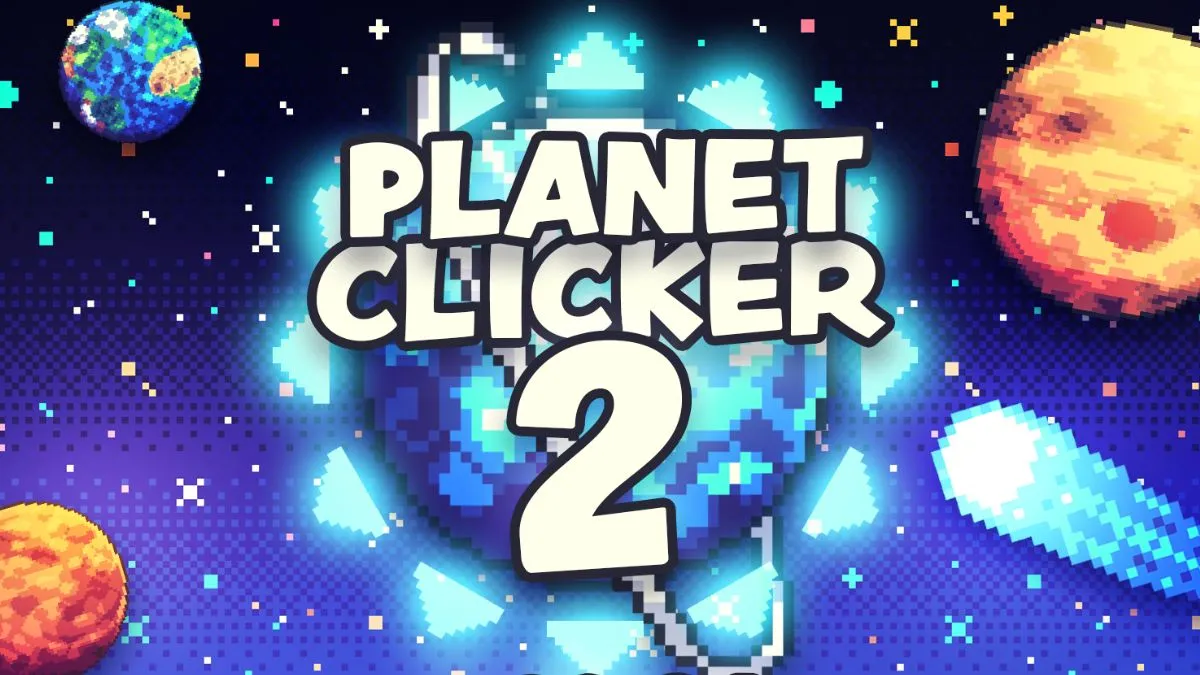
The space theme of Planet Clicker adds another layer of immersion. The visual backdrop of stars, galaxies, and glowing planets creates a sense of infinite potential. There’s something inherently soothing about the vastness of space — it’s quiet, mysterious, and awe-inspiring. Pair that with gentle music or ambient sound effects, and the result is a deeply relaxing gameplay experience.
This calm, repetitive motion — clicking to generate energy, watching your planets flourish — becomes almost meditative. In an age of overstimulation, Planet Clicker offers a pocket-sized universe of tranquility and focus.
Planet Clicker: The Mechanics That Make It Shine
Progressive Unlocks and Rewards
Every idle game lives or dies by its progression system, and Planet Clicker excels in this regard. As you generate energy, you unlock upgrades that multiply your output. Soon, you’re no longer relying on individual clicks — your automated generators are working in the background, even while you’re away.
This passive progression makes every return to the game rewarding. You log back in to find your energy reserves full, your planets thriving, and new upgrades ready to purchase. It’s the perfect balance of patience and payoff.
Strategic Depth Beneath the Surface
While it might look simple, Planet Clicker hides a layer of strategic depth. Deciding how to allocate energy, which upgrades to prioritize, and when to expand to new planets can dramatically affect your progress. The game subtly teaches resource management and optimization — skills that feel rewarding to master, even in such a casual context.
Players who enjoy numbers and efficiency will find endless satisfaction in tweaking their systems for maximum output. Meanwhile, more laid-back players can simply sit back, click, and watch the cosmos unfold.
The Broader Impact of Idle Games Like Planet Clicker
Redefining What It Means to “Play”
The success of Planet Clicker and other idle games represents a shift in how people engage with interactive media. These games don’t demand constant attention — they reward patience and consistency instead. You can play for five minutes or five hours, and still feel like you’re making progress.
This accessibility has made idle games especially popular among adults who don’t have time for traditional gaming. The genre’s flexibility allows it to fit into daily routines, serving as a quick mental break or a relaxing background activity during work or study.
The Rise of Relaxation Gaming
In today’s fast-paced digital world, more players are seeking experiences that soothe rather than stimulate. Planet Clicker fits perfectly into this trend. Its combination of calm visuals, predictable rewards, and low-pressure gameplay creates a form of digital escapism that’s both stress-free and satisfying.
Unlike competitive games that raise adrenaline levels, Planet Clicker invites players to slow down, breathe, and enjoy steady progress. It’s a reminder that not every game needs to be a challenge — sometimes, simplicity is the ultimate pleasure.
Beyond the Screen: Lessons from the Cosmos
Patience and Long-Term Thinking
One of the hidden messages of Planet Clicker lies in its pacing. While the game rewards quick progress early on, true growth requires patience. The longer you play, the more powerful your empire becomes. This mirrors real-world principles of investment, discipline, and long-term planning.
In a way, Planet Clicker becomes a quiet teacher. It demonstrates how small, consistent actions can compound into massive results — a lesson as relevant to real life as it is to virtual galaxies.
The Beauty of Exploration and Curiosity
The game’s focus on unlocking new planets and exploring the unknown taps into humanity’s natural curiosity. Every time a new celestial body appears on your screen, there’s a spark of wonder — what resources will it offer? What will this upgrade unlock? This sense of discovery keeps players engaged far beyond the simple mechanics of clicking.
By encouraging exploration, Planet Clicker rekindles that childlike fascination with the universe. It reminds us how vast and mysterious existence truly is — both within the game and beyond it.
Planet Clicker in the Modern Gaming Landscape
A Testament to Minimalism
In an era of hyper-realistic graphics and massive open worlds, Planet Clicker proves that less can be more. Its success shows that engaging gameplay doesn’t always require complexity — sometimes, the purest fun comes from the simplest interactions.
This minimalist approach also opens the door for accessibility. You don’t need high-end hardware or hours of free time; all you need is curiosity and a few clicks. That universal appeal has allowed Planet Clicker to attract a diverse global audience, from seasoned gamers to casual players.
Community and Shared Progress
Despite its solitary nature, Planet Clicker has inspired vibrant online communities. Players share tips, theories, and progress screenshots, comparing their galactic empires and strategies. These communities transform a personal, idle experience into a social one — a digital campfire around which enthusiasts gather to celebrate progress.
This sense of shared enthusiasm reflects the universal appeal of growth and discovery. Whether you’re building planets or simply trading advice, Planet Clicker fosters connection through curiosity.
The Future of Idle Gaming and Cosmic Creativity
As technology evolves, the possibilities for idle games like Planet Clicker expand exponentially. Developers are already experimenting with integrating AI-driven progression, real-time simulations, and even multiplayer mechanics into the genre. Imagine a version of Planet Clicker where thousands of players collaborate to build a shared galaxy — each contributing energy, resources, and creativity to a living cosmic network.
The potential is limitless. And if history has shown us anything, it’s that players will continue to be drawn to experiences that blend simplicity with scale, relaxation with achievement, and curiosity with creation.
Conclusion
In the grand expanse of gaming, Planet Clicker stands as a quiet masterpiece — proof that even the simplest ideas can reach cosmic heights. Its blend of incremental gameplay, soothing atmosphere, and universal themes of growth and exploration make it more than just another idle game; it’s a digital reflection of human curiosity itself.
Each click, each upgrade, each new planet is a reminder that progress — no matter how small — builds toward something greater. Planet Clicker invites players not just to play, but to reflect, relax, and dream of infinite horizons.
In a world where everything moves fast and demands our attention, this small, serene universe offers a gentle alternative: a place where patience is power, and every click is a step toward the stars.