
Table of Contents
ToggleWar. Strategy. Stealth. In the realm of digital combat, the term masked forces carries more weight than mere camouflage—it embodies the art of hidden aggression, the surprise of unseen combatants, and the thrill of tactics executed in the shadows. But what does “masked forces” really mean in today’s world of gaming and beyond? In this article, we’ll dive deep into the essence of masked forces, exploring their history, applications in digital warfare, and why they have captivated players and strategists alike.
What Are Masked Forces and Why Do They Matter?
When you hear “masked forces,” the image that might spring to mind is operatives in balaclavas, silent infiltrators slipping under the radar, or gaming avatars decked out in tactical gear and faceplates. At its core, masked forces refers to units—whether real or virtual—that rely on concealment, surprise, and the psychological edge of the unknown. Their significance lies not only in what they do, but in how they change the nature of engagement.
Historically, the concept of masked forces is rooted in military traditions of deception and stealth—units operating without clear identification, striking when least expected, and often forcing their enemies to question who they are and where they are. In modern gaming, the same principle applies: masked forces in a first-person shooter bring a compelling layer of suspense and strategy, making every match more than just reflexes.
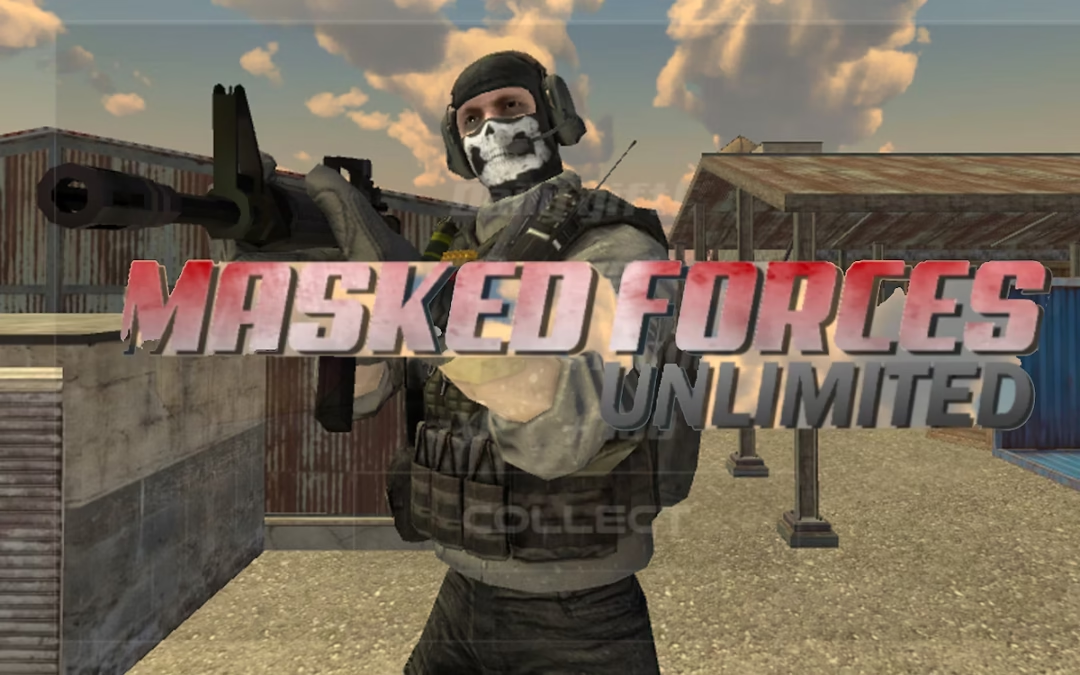
Consider the browser-based shooter game bearing this name: it invites players to go covertly, choose their load-out, equip masks and armor, and step into arenas where quick decisions, redirections and hidden movement decide victory. The very idea of masked forces therefore merges the tactical with the aesthetic: you’re not just fighting—you’re becoming a ghost on the battlefield.
The Rise of Masked Forces in Gaming and Strategy
Over the last decade, the appeal of masked forces has exploded—both inside games and across competitive strategy. The game titled Masked Forces is emblematic: it brings the concept front and center by design, offering multiple battle modes, customizable gear, and the thrill of anonymity-in-combat.
Immersive Gameplay & Tactical Depth
In the game, players choose to don masks, select weapons, and drop into sessions where being seen—or remaining unseen—matters. The mechanics reward those who think ahead: choosing cover, anticipating enemy movements, and using load-outs that support stealth rather than raw firepower. One review noted the blend of accessible mechanics and strategic richness in the game’s design: “buyers get to test … shooting mechanics and enjoy a unique, fun experience.
What makes this shift compelling is that the mask is more than a cosmetic—it signals a mindset. A player behind the mask is less predictable, more dangerous. Their movements are hidden, intentions ambiguous. That ambiguity gives masked forces their power.
Gaming Communities & Player Psychology
Within online multiplayer spheres, masked forces change how players think. Instead of rushing forward with brute force, the masked operative chooses vantage, misdirection, and timing. Community discussions highlight this: players talk about host controls, map knowledge, and weapon strategy in forums dedicated to masked forces gameplay.
In short, a masked approach flips the paradigm. Instead of “see me and shoot me,” it becomes “find me if you can.” That sense of challenge—both for attacker and defender—is central to why masked forces resonate.
Strategic Lessons from Real-World Inspiration
The masked forces concept in gaming draws subtle inspiration from real military doctrine. In real conflict zones, forces operating without insignia—or using disguised entry tactics—gain psychological and tactical advantages. The “masked forces” idea here is to operate in the grey: avoid clear identification, sow confusion, strike when the opponent is unsure. While games simplify these elements, the underlying principle holds.
Thus, the rise of masked forces in digital arenas mirrors real world shifts: asymmetric conflict, stealth operations, and tactical ambiguity. Gamers tap the same thrill of uncertainty: can you spot the masked threat, or are you the one masked?
Anatomy of a Masked Operative—In Game and Imagination
To understand masked forces in detail, we break down the operative’s toolkit: mindset, gear, environment. Whether you’re playing or simply strategizing, these three elements define success.
1. Mindset & Situational Awareness
A masked operative adopts caution and patient aggression. They don’t charge blindly—they wait for an opening. In the gaming context of masked forces, this means scanning for movement, listening for footsteps, using cover intelligently. The best masked players build anticipation: where will the enemy go? What’s behind that doorway?
In broader strategy, this mindset reflects special-operations training: know your terrain, know your enemy, and move when you have the edge.
2. Gear & Customisation
In games like masked forces, the load-out is key. Weapons, ammo, armor and masks are choices that affect style and outcome. One review observed: “players can choose their loadout including armour, weapons. Useable weapons include a revolver, a slugger, a Thompson and even a HMG light machine gun.
The “mask” itself—though stylised in a video game—symbolises concealment and persona. It signals to others: you may not know what I’ll do next.
3. Environment & Tactical Placement
Environment is the playground for masked forces. Urban maps, secluded bases, tight corridors—all play into choices. The game description emphasises this: “various combat zones that range from urban landscapes to secluded military bases.
In these zones, the masked operative thrives by using shadows, angles, cover. Whether you’re ambushing behind crates or sniping from a rooftop, environment becomes part of your weapon.
Why Masked Forces Capture Our Attention
Why doesn’t a standard battle mode suffice? Why does the idea of masked forces keep gamers and strategists engaged? Several reasons converge.
Suspense Through Uncertainty
Human beings are wired to notice what we don’t understand. A masked figure in a game—or in real life—makes us ask: who is that? What will they do? That uncertainty creates suspense, and suspense draws attention. Masked forces invite us into a mindset where seeing is believing, only if we’re alert enough.
Identity & Transformation
Putting on a mask—even digitally—gives a gamer permission to change identity. For a moment, you’re no longer “just a player”, you’re an operative, a phantom. This transformation appeals to our desire for role-play and empowerment. The mask becomes symbolic: anonymity, possibility, power.
Strategy Over Firepower
Masked forces emphasise brain as much as brawn. In a world crowded with shooters where the loudest gun wins, the masked style says: sometimes the quietest move wins. It rewards thinking, timing and finesse. That’s a shift from pure reaction to planning—and it feels satisfying.
Cultural Resonance
The idea of masked or unseen forces taps deep into cultural stories: ninjas, special ops, insurgents, rebels. We’re intrigued by those who fight from the shadows, who don’t announce their arrival. The masked operative becomes a contemporary myth, and gamers play out the legend.
From Pixels to Practice: Lessons That Transcend the Screen
Gaming is one thing; applying lessons is another. What can masked forces teach us beyond the screen?
Adaptability Beats Force
In many games and real scenarios, overwhelming force wins—but only when it’s aligned with strategy. Masked forces teach us that being adaptable, unpredictable, and patient often trumps sheer might. In business, negotiations, or teamwork, this translates to thinking two steps ahead rather than simply pushing hard.
Concealment is a Strategy
Much of the time we focus on what we show others; masked forces remind us of what we don’t show. In games it’s stealth; in life it might be strategic silence, under-the-radar planning, or keeping cards hidden until the right moment. The masked tactical approach shows that absence of exposure can be as powerful as bold visibility.
The Power of Persona
A mask changes perception. In gaming, friendly players might underestimate the masked operative. In real life, how we present ourselves—quietly, confidently, intentionally—shapes outcomes. Masked forces emphasise the subtle psychology of identity: not always loud, but always prepared.
Planning the Environment
Operators don’t walk into battles unprepared—they map, they know terrain. For gamers playing masked forces, map awareness is crucial. And for anyone in life: environment matters. Know the scene, know the influences, position yourself accordingly. That’s the strategic undercurrent of masked forces.
The Future of Masked Forces – What’s Next?
As technology advances, the realm of masked forces will evolve. In gaming, augmented reality (AR) and virtual reality (VR) promise immersive environments where stealth and shadow matter even more. Imagine physically ducking behind virtual walls, tracking opponents through sound cues, wearing a VR headset where your mask becomes literal. Masked forces will become more tactile, more psychological.
In real world strategy—military, business, cybersecurity—the principles of masked forces grow in relevance. Cyber-ops already employ stealth, anonymity and surprise. The idea of masked operatives in digital spaces means that masked forces will be less visible but more impactful.
Ultimately, the masked forces paradigm reminds us that power in stealth isn’t just about hiding—it’s about timing, about choice, and about making the unseen seen only when you want it to be.
Conclusion
The world of masked forces is one of contrast: visibility versus invisibility, noise versus silence, brute strength versus cunning. It’s a reminder that the most potent moves often happen when others are looking elsewhere. Whether you’re skulking through a virtual arena, planning a strategic move in your daily life, or simply fascinated by the art of the hidden, masked forces teach us: don’t just show up—arrive on your own terms.
In the end, mastering the mask isn’t about becoming faceless—it’s about revealing only what serves your purpose, and keeping your true strength beneath the surface. That’s the edge of masked forces.