
Table of Contents
ToggleIn the vast, ever-changing world of casual gaming, a few titles capture lightning in a bottle—those rare gems that feel simple on the surface but keep you tapping for hours. Among the many games that have gone viral for their addictively repetitive nature, duck clicker stands out as one of the most peculiar and strangely satisfying experiences to ever grace screens.
It’s not just another idle game. It’s a symbol of how something incredibly basic—a single click—can turn into a global fascination. Whether you’re a seasoned gamer or someone who stumbled across it while scrolling aimlessly online, the story of Duck Clicker goes beyond gameplay; it’s a glimpse into how humans find joy in simplicity, humor, and a tiny dose of chaos.
This is the story of how a game about ducks, tapping, and endless upgrades became a cult phenomenon—and why it tells us more about ourselves than we might expect.
Duck Clicker – The Game That Made Clicking Fun Again
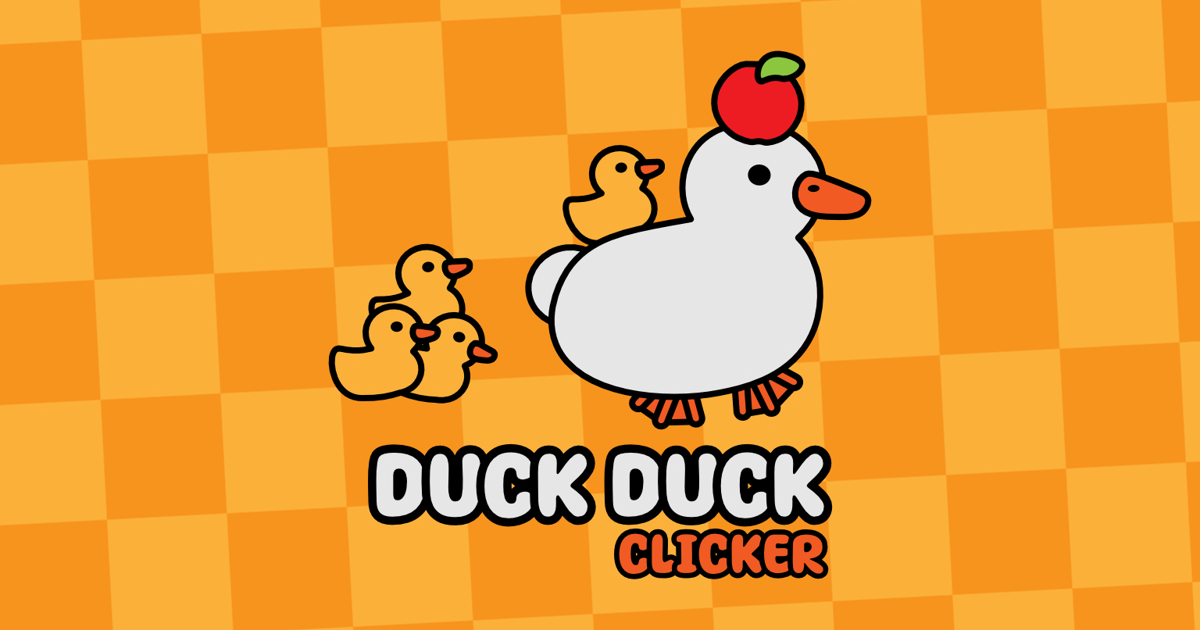
At first glance, duck clicker looks almost laughably simple. A duck sits there, waiting to be clicked. That’s it. No massive open worlds, no complicated quests—just a duck and your finger. But like all deceptively clever games, there’s more under the surface.
Click once, and you earn a few points. Click again, and you start earning faster. As you accumulate points, you can unlock upgrades—maybe your duck starts multiplying, maybe it changes color, or maybe you unlock new backgrounds. The game’s design plays on the powerful psychology of progression: small, constant rewards that make your brain crave “just one more click.”
It’s the digital equivalent of eating potato chips—you never mean to finish the bag, but somehow, you do.
A deceptively simple formula
The brilliance of the game lies in its simplicity. Every sound effect, animation, and reward loop is tuned to deliver instant satisfaction. The cheerful quack, the satisfying pop of a click, and the slow growth of your duck empire—each small moment combines to form a strangely hypnotic rhythm.
Idle or “clicker” games like this rely on an old but effective design principle: give the player constant feedback. Every click feels productive, every upgrade feels earned. The genius of duck clicker is how it embraces absurdity. It doesn’t try to take itself seriously. It’s fun precisely because it knows how ridiculous it is.
The rise of the “clicker” genre
Before ducks started dominating screens, the clicker genre had already begun its quiet takeover. Games like Cookie Clicker and Adventure Capitalist set the stage, proving that even a single repetitive action could hold a player’s attention for hours. These games transformed simple actions into rewarding feedback loops—a perfect match for the short attention spans of the digital age.
But what Duck Clicker did differently was add personality. It wasn’t just about numbers going up—it was about the joy of the unexpected. Ducks would appear in strange outfits, mini-events would trigger without warning, and the player felt like part of a silly, living cartoon.
It wasn’t about winning. It was about smiling, relaxing, and clicking your way into bliss.
The Psychology Behind the Click
Why are people drawn to games like duck clicker? The answer lies deep in the wiring of our brains. Humans love progress, even when it’s artificial. The act of clicking and receiving immediate feedback gives a sense of achievement—small, frequent bursts of dopamine that reward the brain for minimal effort.
It’s the same mechanism behind social media likes, fitness trackers, and mobile notifications. The reward doesn’t have to be big—it just has to be consistent.
Instant gratification and micro rewards
In a fast-paced world, many people crave simplicity and instant results. Games like Duck Clicker offer exactly that. Each click is a tiny reward, a small but satisfying confirmation that your action matters. Unlike complex games that demand hours of commitment, this one lets you achieve progress in seconds.
That’s part of its magic—it respects your time, while also stealing it.
Escapism through humor
Another reason for its appeal is humor. Ducks are inherently funny creatures—awkward, expressive, and lovable. Watching them multiply, dance, or waddle across the screen adds a layer of charm. The absurdity acts as a lighthearted escape from the seriousness of daily life.
When a game makes you laugh, even for a moment, it becomes more than entertainment—it becomes a stress reliever.
The Making of a Viral Sensation
The success of games like Duck Clicker often seems accidental, but it’s rooted in smart design and perfect timing. Developers knew how to blend nostalgia, simplicity, and absurd humor into something that appealed to all ages.
The viral loop
Social media played a huge role in spreading the game. Players shared screenshots of their duck collections, quirky upgrades, and humorous glitches. Memes followed, fueling curiosity and downloads. The community aspect turned it from a small indie project into a global sensation.
Soon, “clicking ducks” became an inside joke—a shared language among fans who loved the game’s mix of charm and chaos.
Accessibility as a superpower
One of the reasons Duck Clicker thrived was accessibility. It didn’t require expensive devices, high-speed connections, or gaming expertise. You could play it on a phone during a lunch break or on a laptop between tasks. It appealed equally to children, students, and adults seeking a momentary distraction.
That universality is what transformed it from a casual game into a cultural moment.
The Art of Simplicity
Games like duck clicker remind us that you don’t need complexity to create joy. In fact, simplicity often has more staying power.
Many modern games overwhelm players with choices—massive worlds, branching storylines, endless menus. But clicker games go in the opposite direction. They strip everything down to the bare essentials: action, feedback, and progress. The design philosophy echoes a fundamental truth—sometimes, less really is more.
Minimal effort, maximum engagement
One tap leads to another. The satisfaction of seeing your numbers rise, your ducks multiply, or your world expand feeds the same reward cycle that makes other hobbies addictive. But in this case, the commitment is low, and the payoff is instant.
That’s the genius of it—it doesn’t demand; it invites. You can play for five minutes or five hours and still feel accomplished.
A metaphor for modern life
At a deeper level, the phenomenon of clicker games mirrors our relationship with technology. We crave productivity, validation, and measurable growth—even when it’s virtual. Each click becomes a miniature reflection of our desire to make progress, to see visible results, to “level up” in a world that often feels uncontrollable.
In that sense, Duck Clicker is more than just a game—it’s a playful parody of human behavior.
Community, Creativity, and Quirky Culture
Another fascinating aspect of Duck Clicker’s success is how it built a vibrant community around something so simple. Players started sharing fan art, crafting duck-themed mods, and even creating real-life merchandise like stickers and plushies.
The humor and creativity within the fanbase gave the game a second life. It wasn’t just about clicking anymore—it became a culture. A global inside joke that celebrated absurdity, joy, and the weird satisfaction of endless tapping.
The nostalgia factor
Many fans described the game as “comforting.” It evoked memories of early internet games—simple, silly, and pure fun. In an era dominated by high-budget titles and competitive esports, Duck Clicker brought back the innocence of just playing for the sake of laughter.
That nostalgia, combined with humor, made it stand out in a crowded gaming world.
The Deeper Meaning of the Duck
What does it say about us that we spend hours clicking digital ducks? Perhaps it’s not as meaningless as it seems.
Games like Duck Clicker highlight the joy of simple goals. In a world overloaded with complexity and pressure, the act of clicking for fun offers a rare kind of peace. It’s not about achievement or prestige—it’s about relaxation, curiosity, and amusement.
The ducks don’t judge, the goals are endless, and the outcome doesn’t matter. That’s what makes it strangely liberating.
For many, it’s not just a game—it’s therapy disguised as comedy.
Conclusion
At its core, duck clicker is a testament to how simple ideas can bring unexpected happiness. It strips gaming down to its most primal form: interaction, feedback, and joy. No complex storylines, no stressful missions—just you, your curiosity, and a duck that never stops quacking.
It’s proof that even in a world obsessed with high-definition graphics and billion-dollar budgets, charm and humor still matter. The game reminds us that fun doesn’t always need to be complicated—it just needs to make you smile.
So the next time you find yourself lost in the rhythm of endless clicking, remember this: you’re not just playing a silly game about ducks—you’re reconnecting with a simple, timeless truth. Joy, no matter how small or strange, is worth chasing.