



Table of Contents
ToggleWhen people think about the Donkey Kong series, Mario and Donkey Kong usually come to mind first. Yet one of Nintendo’s oldest and most fascinating characters is Pauline. Interest in her has grown rapidly thanks to Pauline Donkey Kong Bananza, where players see a younger version of the character and learn more about her place in the Donkey Kong universe.
If you’ve searched for young Pauline Donkey Kong, Pauline Donkey Kong Bananza age, or Pauline Donkey Kong 1981, you’re probably wondering how all these versions connect. Is Bananza a prequel? How old is Pauline supposed to be? Is she the same Pauline rescued by Mario decades ago?
This guide answers those questions while exploring Pauline’s evolution across more than four decades of Nintendo history. Rather than simply listing appearances, we’ll examine how her character has changed, why Nintendo brought her back after years of absence, and what her newest role means for the future of the franchise. Whether you’re a longtime Nintendo fan or someone discovering Pauline through Bananza, you’ll leave with a much clearer understanding of one of gaming’s most enduring characters.
Who Is Pauline in Donkey Kong?
Pauline is one of Nintendo’s oldest recurring characters, making her first appearance in 1981’s Donkey Kong, one of the arcade games that helped define the video game industry.
In that original game:
- Pauline is kidnapped by Donkey Kong.
- Mario, then known as Jumpman, climbs construction platforms to rescue her.
- She becomes the first major female character in a Nintendo game.
Although many players remember Princess Peach as Mario’s classic companion, Pauline actually appeared years earlier.
Unlike many early video game characters, Pauline eventually evolved beyond her original “damsel in distress” role.
Pauline Donkey Kong 1981: Her Original Role
The arcade version of Donkey Kong (1981) introduced three iconic characters:
- Jumpman (later renamed Mario)
- Donkey Kong
- Pauline
The game’s simple story involved Donkey Kong carrying Pauline to the top of a construction site while Mario climbed ladders and avoided barrels.
At the time, storytelling in games was extremely limited. Pauline had very little dialogue because arcade hardware couldn’t support elaborate narratives.
Despite this simplicity, her role became historically significant because she helped establish one of gaming’s earliest character-driven stories.
Today, historians often point to Donkey Kong (1981) as one of the first games to combine platforming with a recognizable narrative.
How Pauline Changed Over the Years
For many years after 1981, Pauline almost disappeared from Nintendo games.
Instead, Princess Peach became Mario’s primary companion.
However, Nintendo never completely abandoned Pauline.
She later appeared in:
- Mario vs. Donkey Kong series
- Mario sports games
- Mobile games
- Mario Kart entries
- Super Mario Odyssey
Each appearance gradually expanded her personality.
Instead of simply waiting to be rescued, she became:
- Confident
- Independent
- Intelligent
- Charismatic
Her role as Mayor of New Donk City in Super Mario Odyssey dramatically changed how fans viewed her.
She became a leader rather than someone needing rescue.
Pauline Donkey Kong Bananza Explained
One of the biggest reasons Pauline is trending again is Donkey Kong Bananza.
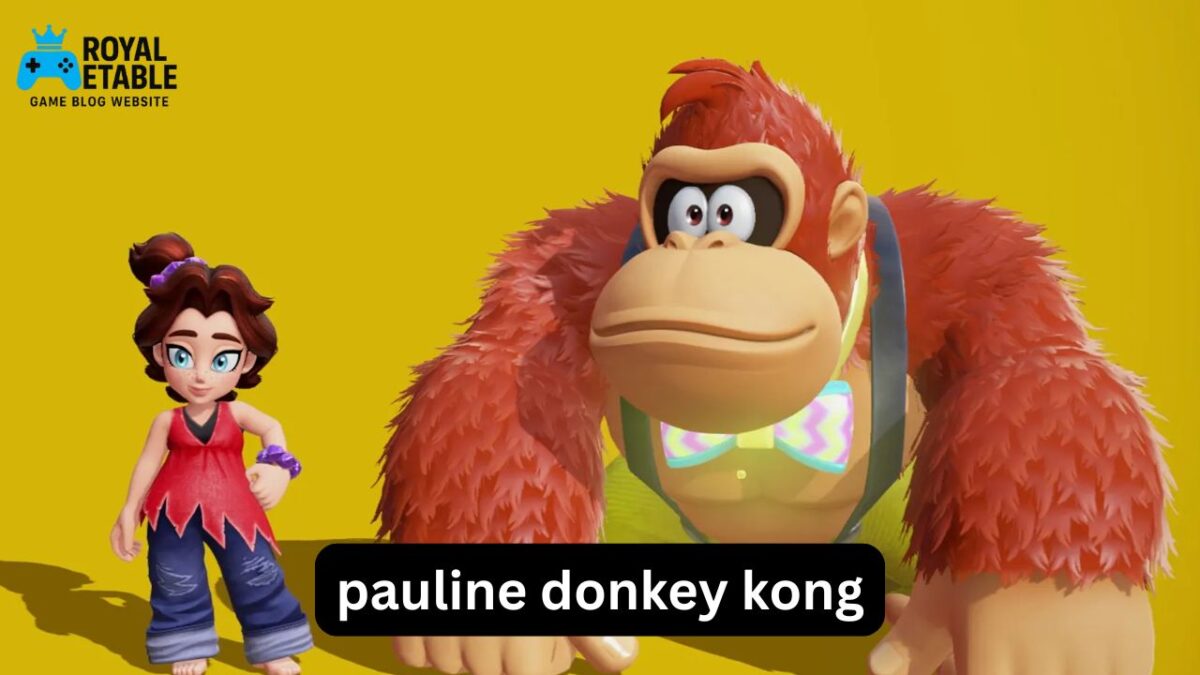
In Bananza, Nintendo introduces a young Pauline, giving players a version of the character that differs from her modern appearances.
Instead of portraying an experienced city leader, Bananza explores Pauline during an earlier stage of her life.
This allows Nintendo to:
- Build more emotional connections
- Expand Donkey Kong lore
- Introduce fresh character interactions
- Explore stories that weren’t possible in earlier games
Many players consider this one of the franchise’s biggest storytelling shifts.
Rather than focusing only on action, Bananza gives greater attention to character development.
Young Pauline Donkey Kong: Why It Matters
At first glance, making Pauline younger may seem like a simple visual change.
In reality, it creates several storytelling opportunities.
A younger Pauline allows developers to:
- Show her growth before becoming a confident adult.
- Build stronger relationships with Donkey Kong.
- Explore new adventures without conflicting with older games.
- Introduce younger audiences to an iconic Nintendo character.
This approach mirrors what many successful franchises do when revisiting beloved characters through earlier adventures.
Pauline Donkey Kong Bananza Age
Nintendo has not officially confirmed Pauline’s exact age in Bananza.
Instead of assigning a specific number, the game presents her as a child or young adolescent.
Most fans estimate she appears somewhere between:
- Approximately 10–14 years old
However, this remains an interpretation rather than confirmed canon.
Nintendo has historically avoided assigning precise ages to many of its major characters, allowing developers greater creative flexibility across different games.
That means discussions about Pauline’s exact age are largely based on visual design, dialogue, and story context rather than official documentation.
Is Bananza a Prequel?
One of the biggest questions players ask is whether Bananza serves as a direct prequel.
The answer is a little more nuanced.
Nintendo often treats its timelines with flexibility.
Rather than fitting every game into one strict chronology, the company frequently prioritizes gameplay and storytelling over rigid continuity.
Because of this:
- Bananza contains elements that feel like a prequel.
- It explores an earlier Pauline.
- It expands Donkey Kong lore.
- It doesn’t necessarily explain every future event.
Fans should think of Bananza as expanding the universe instead of trying to solve every timeline mystery.
Pauline’s Relationship With Donkey Kong
One interesting change over the years is how Nintendo portrays Pauline’s connection to Donkey Kong.
Originally:
- Victim vs. kidnapper
Modern interpretations are much more layered.
Recent games show:
- Greater emotional depth
- More personality for both characters
- Less focus on simple hero-versus-villain storytelling
Bananza continues this trend by allowing interactions that feel more meaningful than the original arcade narrative.
Instead of existing only as the person being rescued, Pauline actively influences the story.
Comparing Pauline Across Different Games
| Game | Pauline’s Role |
|---|---|
| Donkey Kong (1981) | Damsel needing rescue |
| Mario vs. Donkey Kong | Recurring supporting character |
| Super Mario Odyssey | Mayor of New Donk City |
| Mario Kart | Playable racer |
| Donkey Kong Bananza | Young central story character |
This progression shows one of Nintendo’s most significant character evolutions.
Very few gaming characters have changed so dramatically while remaining recognizable.
Why Nintendo Brought Pauline Back
Pauline’s return wasn’t simply driven by nostalgia.
Several factors made her relevant again.
1. Rich History
She connects modern games to Nintendo’s earliest successes.
2. Fresh Storytelling
Unlike Mario or Peach, Pauline still has many unexplored stories.
3. Strong Fan Interest
Fans responded extremely positively to her appearance in Super Mario Odyssey.
That enthusiasm encouraged Nintendo to feature her more prominently.
4. Expanding the Donkey Kong Universe
Nintendo has increasingly invested in making Donkey Kong’s world feel richer, and Pauline helps bridge the Mario and Donkey Kong franchises.
Common Misunderstandings About Pauline
Many online discussions repeat outdated or incorrect assumptions.
Here are the most common ones.
“Pauline only exists to be rescued.”
That was true in 1981, but modern games portray her as an accomplished leader, performer, and central character.
“Pauline disappeared for decades.”
She actually continued appearing in several Nintendo titles, though often in supporting roles.
“Bananza confirms her exact age.”
No official age has been announced.
“Pauline replaced Princess Peach.”
Not at all.
Both characters serve different roles within Nintendo’s universe.
Unique Insights You Won’t Find in Most Articles
1. Pauline Represents Nintendo’s Changing Philosophy
Pauline’s evolution reflects how Nintendo itself has changed. In the early 1980s, simple rescue stories were enough because hardware limited storytelling. Today’s games emphasize personality, relationships, and character growth. Pauline’s transformation mirrors that broader shift in game design.
2. Bananza Uses Familiar Characters to Lower the Barrier for New Players
Introducing a younger Pauline isn’t only a narrative choice—it also makes the character easier for younger audiences to connect with. Players don’t need decades of Nintendo knowledge to understand her role, making the game more accessible without abandoning longtime fans.
3. Pauline Bridges Two Different Nintendo Eras
Unlike many Nintendo characters tied to a single franchise, Pauline naturally connects the classic arcade age with modern cinematic adventures. She links the company’s earliest storytelling experiments to today’s richer narratives, making her a rare symbol of Nintendo’s creative evolution rather than just another recurring character.
Why Pauline Remains Important Today
Pauline has become much more than a nostalgic callback.
She now represents:
- Nintendo’s history
- Character growth
- Stronger storytelling
- The connection between Mario and Donkey Kong
- A broader role for supporting characters
Her increasing importance suggests Nintendo sees long-term potential in expanding her story even further.
FAQ
Is Pauline the same character from Donkey Kong 1981?
Yes. Pauline first appeared in the original 1981 arcade game as the woman kidnapped by Donkey Kong. Over the years, Nintendo has continued to use the same character while expanding her personality and role. Modern appearances build on that original foundation rather than replacing it.
How old is Pauline in Donkey Kong Bananza?
Nintendo has not officially revealed Pauline’s exact age in Bananza. She is portrayed as a young child or early teenager, but any specific age shared online is speculation. The game’s focus is on her younger stage of life rather than a confirmed number.
Why is Pauline young in Donkey Kong Bananza?
The younger version allows Nintendo to explore new stories and character development. It gives players a chance to see Pauline before her later appearances and creates fresh opportunities for storytelling within the Donkey Kong universe.
Is Pauline older than Princess Peach?
Yes, in terms of gaming history. Pauline debuted in 1981, while Princess Peach first appeared in Super Mario Bros. in 1985. Within Nintendo’s fictional universe, however, the timeline doesn’t clearly establish which character is older.
Will Pauline appear in future Donkey Kong games?
While Nintendo rarely announces long-term character plans, Pauline’s increasing prominence suggests she is likely to remain an important part of future Mario and Donkey Kong titles. Her popularity and expanded role give developers many new storytelling possibilities.
Conclusion
Pauline’s journey from the original Donkey Kong (1981) to Donkey Kong Bananza is one of the most remarkable character evolutions in Nintendo’s history. Once known only as the woman Mario rescued, she has grown into a confident, multidimensional figure who plays meaningful roles across multiple franchises.
Bananza continues that evolution by introducing a younger Pauline, offering fresh storytelling possibilities without losing sight of her iconic origins. Although questions about her exact age and the game’s place in Nintendo’s timeline remain open, one thing is clear: Pauline is no longer just part of Donkey Kong’s past—she has become an essential part of its future. For longtime fans and newcomers alike, understanding her story adds a deeper appreciation of how Nintendo continues to reinvent its classic characters while honoring their legacy.