

Table of Contents
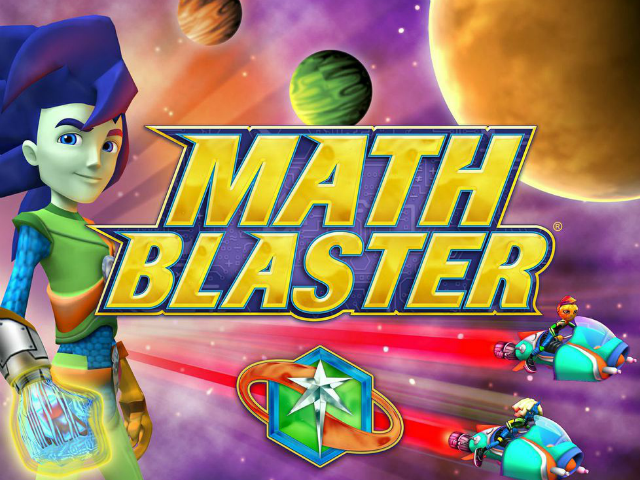
ToggleFor many students who grew up in the 1980s, 1990s, and early 2000s, math was not always associated with textbooks and worksheets. Instead, it was connected to spaceships, alien worlds, exciting missions, and a heroic character known as the Blasternaut. At the center of this experience was Math Blaster, one of the most influential educational video game franchises ever created.
Long before gamification became a popular educational strategy, Math Blaster demonstrated that learning could be engaging, interactive, and genuinely fun. By combining mathematics with action-packed gameplay, the series transformed how children viewed learning and helped shape the future of educational technology.
Today, decades after its original release, Math Blaster remains an important part of educational gaming history. Its impact can still be seen in modern learning apps, digital classrooms, and interactive educational platforms around the world.
What Is Math Blaster?
Math Blaster is an educational video game series designed to teach mathematics through interactive gameplay. Rather than presenting students with traditional drills and exercises, the game places players inside exciting space-themed adventures where solving math problems becomes part of the mission.
Players typically navigate spacecraft, complete challenges, rescue characters, defeat enemies, or explore alien environments while answering questions involving arithmetic, multiplication, division, fractions, and other mathematical concepts.
The game’s unique formula successfully combined entertainment with education, making it one of the earliest and most successful examples of what is now known as educational gaming.
The Origins of Math Blaster
Math Blaster first appeared in 1983 during a period when personal computers were becoming increasingly common in schools and homes. Developed by Davidson & Associates, the game emerged from a simple but powerful idea: children learn better when they are actively engaged.
At a time when educational software was often little more than digital worksheets, Math Blaster introduced a more dynamic approach. Instead of passively memorizing formulas, students interacted with colorful environments and received immediate feedback on their performance.
This innovative concept quickly gained attention from teachers, parents, and students alike. Schools embraced the software as a classroom tool, while families purchased it for home computers to supplement traditional learning.
The result was a groundbreaking success that would eventually evolve into a long-running franchise.
Why Math Blaster Became So Popular
Several factors contributed to the remarkable popularity of Math Blaster.
Learning Through Play
Children naturally enjoy games. Math Blaster leveraged this reality by embedding educational content into entertaining gameplay mechanics.
Instead of forcing students to complete repetitive exercises, the game encouraged them to solve problems because doing so helped them advance through exciting missions.
This approach transformed mathematics from a subject that many children found intimidating into an enjoyable challenge.
Instant Rewards and Feedback
One of the game’s strongest features was its reward system.
Correct answers often resulted in:
- Progressing through missions
- Unlocking new levels
- Earning points
- Completing objectives
- Advancing storylines
Immediate feedback helped students understand mistakes quickly while reinforcing correct answers. This created a positive learning cycle that encouraged continued engagement.
Exciting Science Fiction Themes
The developers understood the power of imagination.
By placing players in futuristic space environments filled with robots, aliens, spaceships, and galactic adventures, Math Blaster appealed directly to children’s curiosity and creativity.
The science fiction setting made educational tasks feel like heroic missions rather than classroom assignments.
The Evolution of the Math Blaster Franchise
Over the years, Math Blaster evolved significantly, adapting to changing technologies and educational standards.
The Early Era (1980s)
The original versions featured simple graphics and straightforward gameplay mechanics.
While primitive by today’s standards, these early games were revolutionary at the time. Students could practice math skills while experiencing a level of interactivity that traditional teaching methods simply could not provide.
The combination of arcade-style action and educational content immediately set the franchise apart from competing software.
The Golden Age (1990s)
The 1990s marked the peak of Math Blaster’s popularity.
During this period, the franchise expanded dramatically with titles such as:
- Math Blaster Plus
- Math Blaster Mystery
- Math Blaster in the Prime Adventure
- Math Blaster Episode I: Search for Spot
- Math Blaster Jr.
These releases introduced richer storylines, improved graphics, voice acting, animated characters, and more immersive worlds.
The franchise’s mascot, the Blasternaut, became widely recognized among young gamers and educators alike.
Computer labs across North America frequently featured Math Blaster installations, making it a familiar experience for an entire generation of students.
The Digital Expansion (2000s)
As technology advanced, Math Blaster continued evolving.
New releases incorporated:
- Enhanced graphics
- CD-ROM technology
- Online features
- Adaptive learning systems
- More sophisticated educational content
The franchise worked to remain relevant in an increasingly competitive educational software market.
Although newer educational platforms emerged during this period, Math Blaster maintained a loyal audience thanks to its established reputation and nostalgic appeal.
Educational Benefits of Math Blaster
Math Blaster succeeded because it was more than just entertainment. The game provided measurable educational benefits that supported student learning.
Improved Mathematical Fluency
Repeated exposure to math concepts helped students develop greater confidence and speed when solving problems.
Regular gameplay reinforced:
- Addition
- Subtraction
- Multiplication
- Division
- Fractions
- Basic algebra concepts
The repetitive practice occurred naturally within the gameplay experience, reducing the boredom often associated with traditional drills.
Enhanced Problem-Solving Skills
Many missions required strategic thinking in addition to mathematical accuracy.
Players learned to:
- Analyze situations
- Make decisions quickly
- Apply logic
- Solve challenges efficiently
These skills extended beyond mathematics and contributed to broader cognitive development.
Increased Motivation
One of the biggest challenges educators face is maintaining student engagement.
Math Blaster addressed this challenge by making learning enjoyable. Students often spent more time practicing mathematical concepts because they were motivated by gameplay goals rather than external pressure.
Reduced Math Anxiety
Many students experience anxiety when faced with mathematics.
Math Blaster helped reduce this fear by presenting math in a playful and supportive environment. Mistakes became opportunities to learn rather than reasons for embarrassment.
This positive relationship with learning often translated into improved classroom performance.
The Psychology Behind Math Blaster’s Success
Modern educational research helps explain why Math Blaster was so effective.
Gamification Before Gamification Existed
Today, gamification is a widely accepted educational strategy. It involves applying game elements such as rewards, progress tracking, achievements, and challenges to learning experiences.
Math Blaster implemented these concepts decades before the term became popular.
Features such as:
- Level progression
- Achievement systems
- Rewards
- Mission-based objectives
- Performance feedback
are now common in educational apps and online learning platforms.
Active Learning
Educational research consistently shows that active participation improves retention.
Math Blaster required students to engage directly with content rather than simply observing it. This active involvement increased comprehension and memory retention.
Positive Reinforcement
The game continuously rewarded effort and progress.
By celebrating small victories, Math Blaster helped students develop confidence and persistence—qualities that support long-term academic success.
Math Blaster’s Influence on Educational Gaming
The success of Math Blaster inspired an entire generation of educational software developers.
Many later educational titles adopted similar principles, including:
- Interactive learning
- Story-driven education
- Gamified rewards
- Adventure-based challenges
The franchise helped demonstrate that educational software could be both academically valuable and commercially successful.
Its influence can be seen in modern platforms that teach:
- Mathematics
- Science
- Reading
- Coding
- Languages
through interactive digital experiences.
Why Parents Still Remember Math Blaster
For many adults, Math Blaster represents more than just a game.
It symbolizes an era when educational technology was beginning to transform learning.
Parents who grew up with the franchise often recall:
- School computer labs
- After-school gaming sessions
- Friendly competition with classmates
- The excitement of completing difficult missions
Today, many of these former players introduce educational games to their own children, continuing the legacy of learning through play.
The nostalgic value of Math Blaster remains remarkably strong, helping maintain interest in the franchise decades after its original release.
Lessons Modern Education Can Learn from Math Blaster
Even in today’s AI-powered educational landscape, Math Blaster offers important lessons.
Engagement Matters
Students learn more effectively when they are interested in the material.
Math Blaster succeeded because it prioritized engagement without sacrificing educational value.
Learning Should Feel Rewarding
The game demonstrated that positive reinforcement can dramatically improve motivation and persistence.
Technology Is Most Effective When It Supports Good Teaching
Math Blaster was not successful simply because it used computers.
It succeeded because the technology was carefully designed around sound educational principles.
Modern educators can benefit from remembering that effective learning experiences require both strong content and meaningful interaction.
The Future of Math Blaster
As educational technology continues evolving, opportunities exist for Math Blaster to reach new audiences.
Future versions could potentially include:
- Artificial intelligence tutoring
- Personalized learning pathways
- Virtual reality environments
- Augmented reality experiences
- Real-time progress tracking
- Collaborative multiplayer learning
Such innovations could modernize the franchise while preserving the core philosophy that made it successful: turning mathematics into an exciting adventure.
Conclusion
Math Blaster remains one of the most influential educational video games ever created. By combining mathematics with engaging gameplay, imaginative storytelling, and rewarding challenges, it transformed how millions of students experienced learning.
Its success proved that education and entertainment do not have to exist separately. When thoughtfully combined, they can create powerful learning experiences that inspire curiosity, confidence, and academic growth.
Decades after its debut, Math Blaster continues to be remembered not just as a game, but as a pioneering educational tool that helped redefine what learning could look like in the digital age. Its legacy lives on in countless educational apps, classroom technologies, and gamified learning platforms that continue to build upon the foundation it established.