


Table of Contents
ToggleThe term bullet force instantly conjures images of speed, precision, and impact. But beyond the thrilling visual of a projectile cutting through air lies a fascinating combination of science, skill, and history. Whether we talk about it as a concept in physics, a feature in modern warfare, or a metaphor in human determination, bullet force represents far more than raw power — it embodies direction, purpose, and control.
To truly grasp the meaning of this term, one must explore its origins, mechanics, and modern interpretations. It’s not only about how fast a bullet travels, but about how energy transforms, how precision meets intent, and how human ingenuity continues to shape both real and virtual worlds where bullet force defines victory or survival.
The Birth of Velocity: Where It All Began
Before bullets existed, there were stones, spears, and arrows. Humans have always sought ways to project force farther than their arms could throw. The invention of gunpowder in ancient China sparked a revolution — literally and figuratively — leading to the first firearms in the 10th century.
As weapons evolved, so did the fascination with the mechanics of impact. Early engineers and scientists realized that force, mass, and acceleration were deeply interconnected. The faster an object traveled, the more energy it carried. This principle, later defined by Isaac Newton’s laws of motion, became the foundation of every weapon and every study related to ballistics.
What began as a simple desire to extend reach turned into a discipline — ballistics — where mathematics and physics met the art of precision. Understanding bullet force became essential not only for military power but for safety, design, and even ethical debates about technology and responsibility.
The Science Behind Bullet Force
At its core, bullet force is about kinetic energy — the energy of motion. When a firearm is discharged, a controlled explosion occurs inside the chamber. Gunpowder ignites, producing gas that expands rapidly. This gas pressure pushes the bullet forward through the barrel at incredible speeds.
The force of the bullet depends on three main factors:
- Mass: The heavier the bullet, the greater the potential impact.
- Velocity: Speed amplifies energy. Even a light bullet can cause massive damage at high velocity.
- Resistance: Air resistance and target density affect how far and how deeply a bullet can penetrate.
The energy is calculated through the equation for kinetic energy — E=12mv2E = \frac{1}{2} m v^2E=21mv2. Even small increases in velocity dramatically boost impact energy because velocity is squared. That’s why sniper rifles, designed for long-range precision, focus heavily on maintaining velocity over distance.
A bullet doesn’t just travel — it spins. The grooves inside a gun barrel, called rifling, impart rotation to the bullet, stabilizing it and ensuring accuracy. Without spin, a bullet would tumble unpredictably, losing both power and precision.
In essence, the study of bullet force is the study of controlled chaos — explosive energy guided into a precise trajectory.
From Science to Survival: The Practical Side of Ballistics
Understanding bullet dynamics isn’t just about science; it’s about survival, design, and ethics. For soldiers and law enforcement officers, bullet force determines both effectiveness and safety. For engineers, it dictates material strength, armor development, and even how energy can be redirected to minimize harm.
Ballistic experts spend years studying how bullets behave under different conditions — temperature, humidity, distance, and angle. This knowledge helps develop both more accurate ammunition and better protective gear. It’s a field where one miscalculation can mean the difference between precision and disaster.
Bullet Force in the Digital World – A New Kind of Power
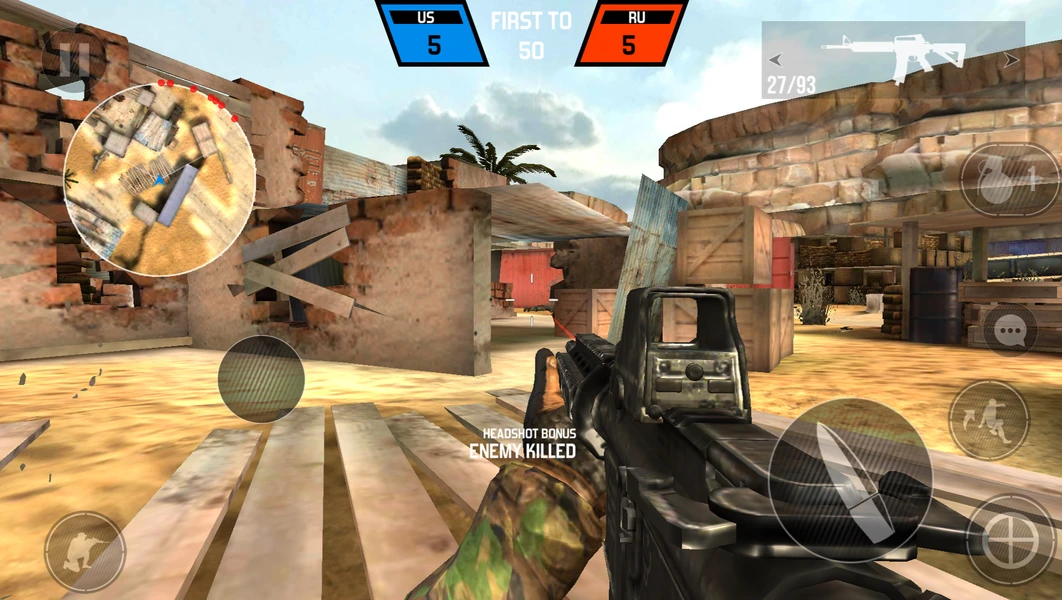
The modern age has taken the fascination with bullets and transformed it into digital entertainment and simulation. In the world of video games, bullet force represents more than simple combat mechanics — it’s about immersion, realism, and strategy.
Game developers meticulously recreate the physics of bullets to make players feel the thrill of battle without the danger of real conflict. Everything from the sound of a gunshot to the trajectory of a projectile is modeled after real-world physics. Some games even calculate wind resistance, bullet drop, and impact power to create lifelike experiences.
This fusion of entertainment and education has made virtual combat a space where understanding physics becomes second nature. Players learn intuitively about angles, recoil, and movement — principles that mirror real-world ballistics, though applied safely behind a screen.
The Psychology of Power and Precision
In digital and real-life scenarios alike, the concept of bullet force represents something primal: control over power. Humans have always been fascinated by the idea of directing immense energy toward a goal. The thrill comes not from destruction but from precision — the ability to master something inherently dangerous and unpredictable.
This fascination often extends into symbolism. In literature and film, a bullet can represent fate, decision, or change. The moment before a trigger is pulled is often the point of no return — the instant where control and consequence intersect.
The virtual representation of bullet force allows individuals to explore these emotions and experiences safely. It’s a psychological bridge between curiosity and control — between the fascination of force and the responsibility of its use.
The Duality of Force – Creation and Destruction
Force, by its nature, is neutral. What makes it meaningful is how it’s applied. In the case of bullet force, it can protect or harm, save or destroy. This duality has shaped not only warfare but culture, ethics, and innovation.
From defense technology to competitive sports like marksmanship, the mastery of bullet force reflects human adaptability. It shows how something as small as a bullet — propelled by physics, shaped by engineering, and guided by intent — can alter outcomes on scales both personal and global.
The same principles that propel bullets have been harnessed in countless peaceful applications: satellite launches, mechanical design, propulsion systems, and even medical tools that rely on controlled kinetic energy. In that sense, understanding force isn’t about violence — it’s about the mastery of energy itself.
The Evolution of Bullet Force – From Muskets to Modern Marvels
The story of bullets is, in many ways, the story of civilization’s progress. Early muskets fired round lead balls with little accuracy. Over centuries, innovation transformed firearms into precise instruments of strategy and defense.
The Industrial Revolution brought new materials, manufacturing precision, and understanding of aerodynamics. Rifled barrels increased range and stability. Smokeless powder improved consistency. Eventually, automatic and semi-automatic weapons changed the pace of warfare forever.
Each innovation was about refining bullet force — controlling energy more efficiently, achieving maximum impact with minimum waste.
Today, advances in materials science and computer modeling allow engineers to design bullets for specialized purposes: subsonic rounds for stealth, armor-piercing rounds for military use, and frangible rounds that disintegrate on impact to minimize collateral damage.
It’s a constant balancing act between performance and responsibility. The challenge is not how powerful a bullet can become, but how precisely that power can be used.
Beyond the Battlefield: Everyday Applications of Ballistics
Ballistics is not confined to warfare. It plays a vital role in law enforcement, forensic science, and even space exploration. Forensic experts study the impact patterns of bullets to solve crimes. Scientists apply similar principles to understand meteor impacts or spacecraft re-entry.
In sports, competitive shooters rely on precise calculations of bullet force to hit targets hundreds of meters away. Every movement, breath, and heartbeat affects trajectory — making shooting as much a mental game as a physical one.
Thus, bullet force becomes a study in focus. It teaches discipline, patience, and the art of controlling chaos.
Ethical Questions Around Power
With great power comes great responsibility — and nowhere is that truer than in the discussion of bullets. The physics behind them may be neutral, but their use is deeply human. Every advancement raises questions: how much force is too much? How do we balance innovation with ethics?
Societies around the world continue to grapple with these questions. Technology keeps evolving, offering both promise and peril. The line between defense and destruction remains as thin as ever.
In this debate, the concept of bullet force serves as a reminder — that power, without wisdom, is incomplete.
The Symbolic Force Within Us
If we strip away the physical definition, bullet force becomes a metaphor for human drive. It represents focus, determination, and the unstoppable momentum of willpower.
Every person carries their own bullet force within — the energy that propels them toward goals, the resilience that breaks through obstacles. Just as a bullet must overcome friction and resistance to reach its target, we too must face challenges that test our strength and precision.
The lesson lies in direction. Force without purpose can cause chaos; force guided by intention creates change.
Conclusion
The story of bullet force is the story of energy — unleashed, directed, and refined. From the smoky fields of early warfare to the sophisticated simulations of modern technology, it stands as a testament to humanity’s complex relationship with power.
Science explains how it works; experience teaches why it matters. Behind every bullet lies a balance between control and chaos, between invention and intention.
In the end, bullet force is more than physics. It’s a reflection of the human condition — our relentless pursuit of mastery, our struggle with morality, and our fascination with the forces that shape our world.
Whether in steel, in science, or in spirit, the true strength of bullet force lies not in destruction, but in precision — the power to aim, to focus, and to choose wisely where our energy lands.